Small Business Rebranding Guide for 2026
Rebranding your small business means more than swapping out a logo. This guide walks you through every step, from choosing a new name and visual identity to redirecting SEO value and communicating the change to your customers.
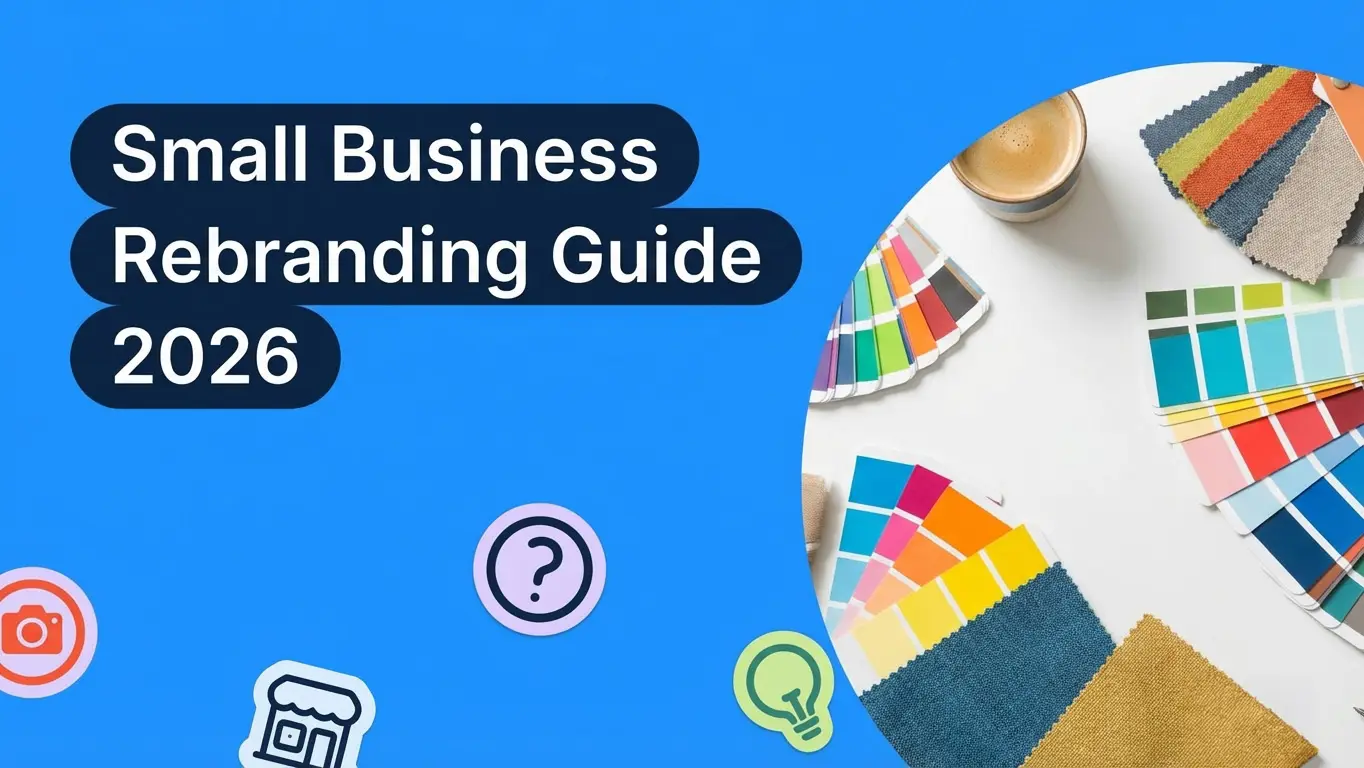
Rebranding your small business starts with defining why you need the change, then working through five core steps. Choose a new name that reflects your updated direction, build a fresh visual identity with a new logo and color palette, redirect your old URLs so you keep your search rankings, update every customer touchpoint from social media to email signatures, and announce the change to your audience before and after launch day. This guide walks you through the full process so you can rebrand with confidence and come out stronger on the other side.
According to LOGO.com data, the most common industries among the 4.6 million businesses that have built a brand on the platform are fashion (7.3%), technology (7.1%), and education (5.0%), showing that brand identity matters across every sector.
When Rebranding Makes Sense for Your Small Business
Not every rough patch calls for a rebrand. Before you commit to the time and cost of a full identity overhaul, make sure you actually need one. A rebrand makes sense when your business model has evolved so much that your current name or identity no longer fits what you offer. It also makes sense when a trademark dispute forces you to change your name or domain, when your target audience has shifted and your brand feels out of step, or when your visual identity looks dated and you keep losing credibility at first glance.
If your sales have dipped but your brand still resonates with customers, the fix might be a marketing refresh rather than a full rebrand. A rebrand is a significant move. Save it for situations where your current identity is genuinely holding you back or creating confusion in the market.
On the other hand, if customers consistently tell you they don't understand what your business does, or if your name creates confusion with another company, those are clear signals that a rebrand will solve a real problem. Mergers, acquisitions, and major product pivots are also natural trigger points for rebranding.
Before you start the process, write down exactly what you want the rebrand to achieve. Maybe you want to attract a different customer segment, distance yourself from a negative association, or simply modernize your image. Having a clear goal keeps every decision focused and prevents scope creep as you work through the steps ahead.
Choose a New Brand Name That Works
Your business name is the foundation of everything that follows. If your rebrand involves a name change, take the time to get it right. Start by listing what your business actually does and who it serves. A strong business name communicates one or both of those things without needing explanation.
The best business names are easy to spell, easy to say out loud, and available as a domain name. Avoid names that are too clever or abstract. Your customers should be able to hear your name once and remember it later without looking it up. If someone has to ask you how to spell it, that is a red flag.
Check for trademark conflicts early in the process. The Reddit poster who inspired this article lost an entire year of SEO work because of a trademark claim on their original URL. If you want to protect your brand properly, our guide on trademarking your logo walks you through the full process. At minimum, search the USPTO database and your country's trademark registry before you commit to any new name. A quick search now saves months of rework later.
Test your top three name options with people outside your business. Ask them what the name makes them think of and whether it sounds professional. If most people get the right impression without extra context, you have a winner. Pay attention to any unintended associations or meanings in other languages if you plan to serve international customers.
Once you settle on a name, secure the matching domain, all relevant social media handles, and any trademark filings you need before you announce anything publicly. Protecting your new name from day one saves headaches later and prevents someone else from claiming the handles you need.
Design a New Visual Identity
Your visual identity is the first thing people notice, and it shapes how they feel about your business before they read a single word. Your logo, color palette, typography, and imagery all need to work together to tell a cohesive story about who you are and what you stand for.
Start with your logo. A strong logo for a small business is simple, versatile, and recognizable at any size. It should look just as good on a business card as it does on a social media profile picture or the side of a delivery van. Tools like LOGO.com let you create a professional logo and full brand kit without hiring a designer, which is especially helpful when you need to move quickly or work within a tight budget.
Next, choose your brand colors. Stick to a primary palette of two to three colors and one or two accent colors. Consistency matters more than complexity here. Every time someone sees your colors together, they should instantly think of your brand. Research color psychology to make sure your palette matches the emotions you want your audience to feel. Blues tend to convey trust. Warm tones like orange and red create energy and urgency. Greens signal growth and sustainability.
Pick one or two typefaces and use them everywhere. One for headings and one for body text is a reliable approach. Make sure they are legible on screens and in print. Avoid overly decorative fonts that sacrifice readability for style. Your typography should feel natural to your audience and consistent across your website, social media, packaging, and print materials.
Finally, create brand guidelines even if you are a one person operation. A simple document that shows your logo usage rules, color hex codes, and typography specs keeps everything looking consistent as you roll out your new identity across channels. If you want a deeper look at what goes into a strong set of brand assets, our brand kit guide covers everything you need. LOGO.com generates brand guidelines automatically, so you can skip the manual work entirely and start using your new assets right away.
Update Your Online Presence Everywhere
Once your new brand identity is ready, you need to update it everywhere your business shows up online. This includes your website, social media profiles, Google Business Profile, directory listings, email signatures, and any third party platforms where your brand appears. Make a checklist of every place your brand lives online so you do not miss anything.
Start with your website. Update your domain, logo, colors, and copy. If you changed your business name, rewrite your About page and homepage to reflect the new direction. Make sure your contact information is current on every page. Check that your site's favicon, meta images, and Open Graph tags all use your new branding so your links look correct when shared on social media.
Next, update your social media profiles. Change your handle if needed, swap in the new logo and cover images, and write a pinned post announcing the change so followers know they are in the right place. If you cannot get your ideal handle, add a keyword or location to keep it recognizable.
Update your Google Business Profile with your new name, logo, and any updated categories or descriptions. This affects how you appear in local search results, so do not skip it. Google may require verification if you change your business name, so plan for a short delay.
Go through every directory listing you have ever created. Yelp, industry directories, Chamber of Commerce pages, and anywhere else your old brand appears. Inconsistent information across the web confuses both customers and search engines. Finally, update your email signature and any templates you use for invoices, proposals, or onboarding documents. These small details add up to a polished, professional impression that reinforces your new brand at every interaction.
Redirect Your SEO Value to Your New Domain
One of the biggest risks of rebranding is losing the search engine rankings you have built over months or years. If you are changing your domain name, you need a solid redirect strategy to preserve as much of that value as possible. Without redirects, every backlink pointing to your old domain becomes a dead end.
Set up 301 redirects from every page on your old domain to the corresponding page on your new domain. A 301 redirect tells search engines that the move is permanent and passes most of your ranking authority to the new URL. If you simply let your old domain expire, all of that SEO equity disappears overnight and you start from zero.
Submit your new sitemap to Google Search Console and Bing Webmaster Tools. This helps search engines discover and index your new pages faster. Use the Change of Address tool if you are moving to a completely new domain. Google built this feature specifically for site migrations, and their documentation walks you through it step by step.
Update your backlinks wherever you can. Reach out to websites that link to your old domain and ask them to update the URL. Start with your highest value links, like those from industry publications, partners, or directories. Even updating a handful of strong backlinks can make a noticeable difference in how quickly your rankings recover.
Keep your old domain active and redirecting for at least 12 months. Some SEO professionals recommend keeping redirects in place indefinitely, which is relatively cheap insurance against losing traffic. Monitor your search performance closely in the weeks after the switch. Expect a temporary dip in rankings and traffic. This is normal and usually recovers within one to three months, as long as your redirects are working properly and your new content is being indexed.
Communicate the Rebrand to Your Customers
Silence during a rebrand creates confusion. Your customers should never have to guess whether your business changed hands or shut down. A clear communication plan keeps your audience engaged and excited rather than lost.
Start communicating before you launch. Send an email to your customer list at least two weeks before the rebrand goes live. Tell them what is changing, why you are making the change, and what it means for them. If nothing changes about your products or services, say that explicitly so people know what to expect.
On launch day, make the announcement across every channel. Post on social media, send a launch email, update your website banner, and consider a short video or behind the scenes story explaining the rebrand. People love seeing the creative process and the story behind a new identity. This kind of content tends to get strong engagement because it feels personal and authentic.
After launch, keep reinforcing the new brand for at least 30 days. Mention it in your email footer, reference it in your social media posts, and add a note to your invoices or receipts. The more touchpoints you use, the faster the new name sticks in people's minds.
If you serve local customers, update any signage, printed materials, and packaging right away. And if you have business cards with your old brand, replace them immediately. Handing out outdated cards undermines the entire rebranding effort and sends mixed signals about your professionalism.
Rebuild Your Marketing After a Rebrand
A rebrand is also an opportunity to rethink your marketing strategy from the ground up. Your new identity gives you a clean slate to attract the right audience with the right message and position your business exactly where you want it in the market.
Revisit your ideal customer profile. Your rebrand might reflect a shift in who you serve or how you serve them. Make sure your marketing targets the right people with language that resonates. Update your buyer personas and messaging frameworks if they have changed.
Update your content strategy. If you have a blog, audit your existing posts for references to your old brand and update them. Create new content that introduces your brand story and positions your business clearly in the market. A few strong posts published right after launch help search engines understand your new brand and give your audience something to engage with.
Run a launch campaign and treat your rebrand like a product release. Offer a limited time promotion, host a virtual event, or create a social media challenge around your new brand. Generate buzz and give people a reason to pay attention during the first few weeks when momentum matters most.
Invest in paid advertising for the first 60 to 90 days after the rebrand. Your organic reach will take time to recover, and paid ads can bridge the gap while search engines catch up. Finally, ask for reviews and testimonials from customers who have worked with you through the transition. Fresh reviews under your new brand name build trust with new prospects who discover you for the first time.
Common Rebranding Mistakes to Avoid
The most common rebranding mistake is rushing the process. When you move too fast, you end up with a name you have not properly vetted, a visual identity that does not resonate, or a launch that confuses more people than it excites. Give yourself enough runway to do each step properly.
Another frequent mistake is rebranding without telling your customers why. If you just swap your logo and name overnight with no explanation, people assume the worst. They might think you got acquired, went out of business, or are trying to hide something. Transparency builds trust and turns your rebrand into a positive story rather than a source of suspicion.
Skipping the SEO redirect step is another costly error. Every page on your old domain that goes unredirected is a page of lost traffic and lost authority. This is especially painful for businesses that have invested heavily in content marketing or built up a library of pages that rank well in search.
Finally, many business owners rebrand their logo and website but forget about everything else. Business cards, social media headers, email signatures, proposal templates, and directory listings all carry your brand. If half your touchpoints show the old brand and half show the new one, you look disorganized rather than refreshed. A thorough rollout across every channel is what separates a successful rebrand from a confusing one.
Frequently Asked Questions About Rebranding
How much does it cost to rebrand a small business?
The cost varies widely depending on scope. A simple visual refresh with a new logo and updated website might cost as little as $100 to $500 if you use tools like LOGO.com and handle the work yourself. A full rebrand with a new name, domain, legal filings, and professional design services can range from $2,000 to $20,000 or more. The biggest hidden costs are often the time you invest and the temporary dip in revenue during the transition.
How long does a rebrand take?
Plan for at least four to eight weeks from strategy to launch. A name change with domain migration adds complexity and may take closer to three months. The key is giving yourself enough time to plan thoroughly. A poorly executed rebrand causes more damage than taking extra time to do it right.
Will I lose my Google rankings after rebranding?
You will likely see a temporary drop in rankings, especially if you change your domain name. With proper 301 redirects, an updated sitemap, and a backlink outreach plan, most businesses recover their search traffic within one to three months. Businesses that skip redirects or let their old domain expire often lose rankings permanently.
Can I rebrand without changing my business name?
Absolutely. Many businesses rebrand by updating their logo, color palette, messaging, and website without changing their name at all. This is sometimes called a brand refresh. It works well when your name still fits but your visual identity or positioning feels outdated and needs a modern update.
When is the best time to rebrand?
The best time to rebrand is during a natural transition point in your business. A new product launch, a pivot in your business model, or the start of a new fiscal year are all good opportunities. Avoid rebranding during your busiest season, when the disruption could cost you the most revenue. If a trademark dispute is forcing your hand, move quickly but methodically to protect your assets during the transition.
Start Your Rebrand with LOGO.com
Whether you are refreshing your look or starting completely from scratch, LOGO.com gives you everything you need to build a professional brand identity in minutes. Create a custom logo, generate a complete brand kit with colors and fonts, and download brand guidelines that keep everything consistent across every channel. Your rebrand deserves a strong visual foundation, and LOGO.com makes it easy to build one without the agency price tag.
Recent posts
Oct 26, 2026 by: Sean Baker

Oct 19, 2026 by: Sean Baker

Oct 14, 2026 by: Vanessa Lam
Oct 12, 2026 by: Sean Baker