Own Your Brand: A Simple Guide to Trademarking Your Logo
Want to protect your brand? Learn how to trademark your logo, register it legally, and keep your business identity safe with this step-by-step guide.
Your logo isn’t just part of your brand—it is your brand, at a glance.
It’s the first thing people notice, the thing they remember, and the piece that ties everything together.
So when it starts showing up on your packaging, social media, and customer emails, here’s the big question: Is it legally yours?
Trademarking your logo helps make sure the answer is yes.
It protects your design, your reputation, and the business you’re working hard to build.
You don’t need to hire a lawyer to do it (though it is helpful), you just need to start with a logo you love and follow a few smart steps.
Why Trademarking Isn’t Just for Big Brands
A trademark gives you legal protection for your brand’s identity. It gives you the exclusive right to use your logo alongside your products or services—and the power to take action if someone else tries to use something too similar.
Without a registered trademark, you still have some protection (called common law rights), but it’s limited.
You’d have to prove you used the logo first and that another brand is causing confusion. That’s a lot harder without formal registration.
When your logo is trademarked, things get much simpler. You have clear, documented rights—and the legal backing to protect what you’ve built, which is why trademarking your logo should be part of your business plan from the start.
Why You Might Need a Trademark (Even If You’re Just Starting Out)
Trademarking might sound like something only big companies need. But if you’re a small business, a solo brand, or a creator building something real, it’s one of the smartest moves you can make early on.
You’re putting time, energy, and creativity into your brand—that deserves protection.

Here’s what trademarking your logo can help you avoid:
- Someone else registering a similar logo before you.
- Infringement issues that hurt your reputation.
- Expensive rebrands if legal conflicts come up.
- Confused customers (and lost trust).
If you plan to grow your business, expand into new markets, or invest in marketing, a trademark gives you the legal foundation to support that growth.
Is Your Logo Trademark-Ready?
Trademarking a logo only works if the logo is strong enough to stand on its own. If it’s too generic, too trendy, or too similar to something else already out there, it’s probably not getting approved.
So before you file anything, ask yourself: Does this actually look like my brand? Or does it look like something five other businesses could be using?
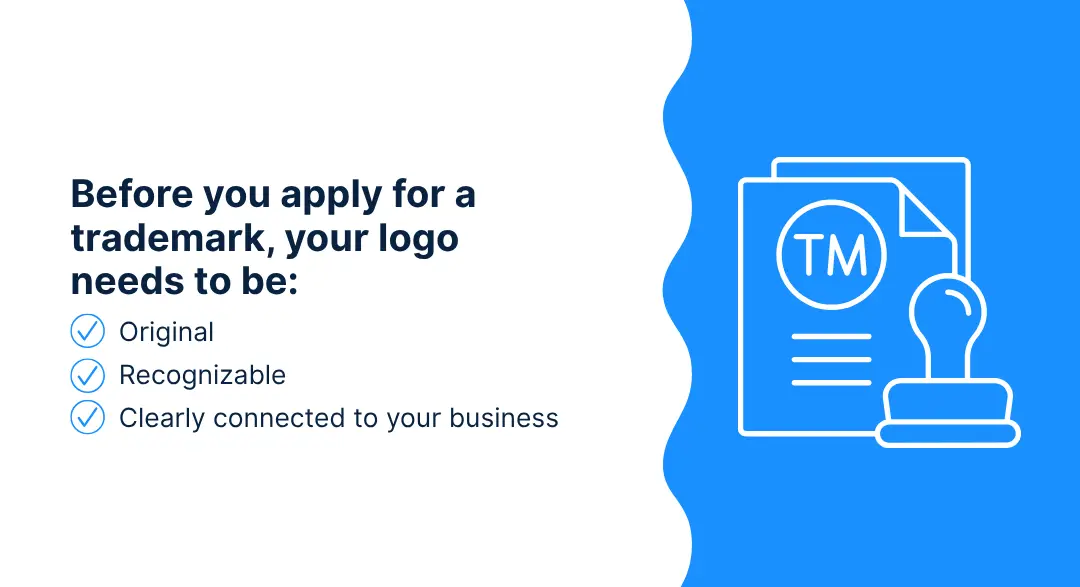
A great trademark-ready logo should be:
- Unique enough to be clearly yours.
- Recognizable in your industry.
- Tied to your brand name or offer in a meaningful way.
If you’re still in the design stage, LOGO.com can help you create a logo that’s truly yours, not a cookie-cutter version. Use the logo maker to experiment with icons, fonts, and layouts that reflect your brand’s personality.
Already have a logo? Use our Upload a Logo tool to generate a full brand kit instantly. It’s a simple way to stay organized—and get everything formatted and ready for the trademark process.
If your logo is ready, here’s a simple step-by-step guide on how you can make it legally yours.
Step 1: Before You Apply, Check What’s Already Out There
Before you fill out a single form, you need to make sure your logo isn’t already taken or too close to something that is.
This part is easy to skip, but it’s where a lot of people get stuck. A quick search now can save you a ton of time, money, and stress later.
Start by checking:
- The USPTO database (if you're in the U.S.).
- The WIPO Global Brand Database (if you're planning to expand internationally).
- Google, business directories, and social media (real-world usage matters too).
Look for logos that feel similar, not just visually, but in meaning or industry. If your logo could be mistaken for another brand’s, even if the design is slightly different, it may not pass.
If this feels overwhelming, you’re not alone.
This is a good point to bring in a trademark attorney or use a professional search service. A little help upfront can keep you from running into big issues down the road.
Step 2: Decide Where You Want Protection
There’s no such thing as a global trademark. You’ll need to decide where you want your logo protected based on where you’re doing business now and where you’re headed next.
Start with your home country. That’s usually where you’ll see the most immediate benefit.
From there, think about:
- Are you planning to ship internationally?
- Are you expanding into new markets?
- Will you eventually license or franchise?
Your answers can help you decide whether to file in one country or explore international protection through the Madrid System, which simplifies the process across multiple regions.
Here’s a quick list of a few organizations you can apply to have your logo trademarked through:
- U.S.-based business? File with the USPTO.
- Selling in Europe? Consider an EUTM application.
- Going global later? Look into the Madrid System to simplify multi-country filings.
You don’t have to do it all at once. Start where your brand is growing now and add coverage as your footprint expands.
Step 3: Apply to Trademark Your Logo
This is the official step—but don’t worry, it’s more paperwork than drama.
In the U.S., you’ll file through the Trademark Electronic Application System (TEAS).
The process walks you through everything, but here’s what you’ll need to be ready for:
- Describe your business and what your logo represents.
- Upload your logo in the right format.
- Pay the filing fee (usually $250–$350 per class of goods/services).
You’ll also pick a filing basis:
- Choose “Use in commerce” if your logo is already in use.
- Choose “Intent to use” if you're still getting ready to launch.
Our best advice is to be very specific when describing your goods or services. If you’re too broad, your application might get flagged. If you’re too vague, it might not cover your real use.
This is where a trademark attorney can be especially helpful. But even if you're doing it yourself, taking time to be clear and accurate will go a long way.
Step 4: Keep an Eye on Your Application (and Your Logo)
Once you hit “submit,” your application doesn’t just disappear into the void—it enters a review process that takes a little time.
Here’s what happens next:
- A trademark examiner checks for any conflicts or issues.
- If anything’s unclear, you’ll get a note (called an Office Action) asking for edits or clarification.
- There’s a short period where others can object if they think your logo steps on their toes.
- If everything checks out, your logo gets approved and officially registered.
The whole process typically takes 6–12 months, sometimes longer if objections pop up. However, once it’s done, you’ll have a certificate and the right to add the ® symbol next to your logo.
Trademark Approved? Don’t Set It and Forget It
Getting a trademark is one thing. Keeping it active is another.
Here’s how to stay covered:
- File renewal documents at year 5, year 10, and every 10 years after that.
- Keep an eye out for copycats (you can monitor manually or use a trademark watch service).
- Use your logo regularly and in the way you registered it—consistency strengthens your claim.
You don’t have to obsess over it every day, but setting a few reminders now can save you from a scramble later.
Your Logo’s Official—Now Put It to Work
Once your logo is officially trademarked, the goal shifts from protecting it to putting it to work.
Legal rights are important, but the power of a logo comes from recognition.
People need to see it. Often. In the right places. Used consistently. This is where trust starts to build. So start using your logo like you mean it.
Add it to your packaging, emails, website, social graphics, receipts, shipping labels—wherever your brand shows up, your logo should too.
Keep the colors, spacing, and sizing consistent. That’s how you go from “a logo” to your logo—something people associate with reliability, quality, and a business that’s built to last.
Now that it’s yours on paper, it’s time to make it yours in people’s minds.
How LOGO.com Helps You Stay Consistent and Covered
A trademark gives you legal rights, but strong branding is what keeps your business recognizable and respected. That’s where the right tools make a difference.
LOGO.com helps you create more than a logo. It gives you the structure to keep everything consistent, clean, and ready for real-world use.
Here’s how:
- Design a logo that stands out and meets trademark standards for originality.
- Access high-quality file formats on your brand kit for everything from merchandise to legal documents.
- Lock in your brand colors, fonts, and digital template layouts so you’re not reinventing the wheel every time you post or print.
Protecting your brand starts with owning your logo. But it doesn’t stop there.
LOGO.com gives you what you need to show up professionally, consistently, and confidently—every time.
What Business Owners Ask Us Most
Do I need to trademark my logo right away?
If you’re just testing ideas, you can wait. But if your logo is already out in the world—and you plan to grow—don’t put it off too long. Early registration gives you first rights and protects you from costly rebrands later.
Can I trademark a logo I made with a logo maker?
Yes. When you use LOGO.com, you own the design you create. You can trademark it just like any custom design.
How much does it cost to trademark a logo?
In the U.S., filing typically costs $250–$350 per category. Legal help may cost more, but it can be worth it to avoid errors.
What’s the difference between ™ and ®?
™ means you’re claiming common law rights. ® means your trademark is officially registered. You can use ™ as soon as you start using the logo publicly.
Can I copyright my logo instead of trademarking it?
Copyright may apply if your logo includes original artwork, but it doesn’t protect your brand name or prevent others from using similar logos in your industry. Trademarks are the best tool for brand protection.
Build It, Brand It, and Make It Official
Your logo represents everything you’ve created—and everything you’re working toward. It deserves protection that grows with your brand.
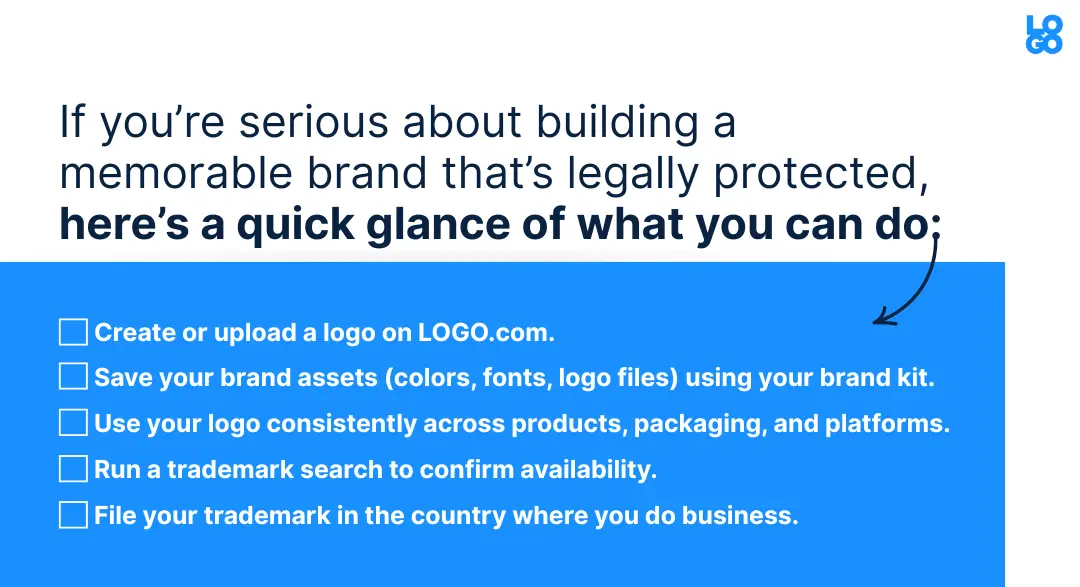
With LOGO.com, you don’t just get a logo. You get the tools to use it consistently and professionally across every product, platform, and customer touchpoint.
Start by creating a logo that truly fits your business—or upload the one you’re already using. Then use your brand kit to stay consistent and ready. When the time comes, filing for trademark protection becomes a whole lot easier.
You’ve built something worth remembering. Now take the step that makes it officially yours.
Recent posts

Oct 19, 2026 by: Sean Baker

Oct 14, 2026 by: Vanessa Lam
Oct 12, 2026 by: Sean Baker

Oct 5, 2026 by: Sean Baker