Why Clients Ghost After You Send a Quote
Clients ghost your quote because the number arrived without context. Here is how to present pricing so prospects reply instead of disappearing.
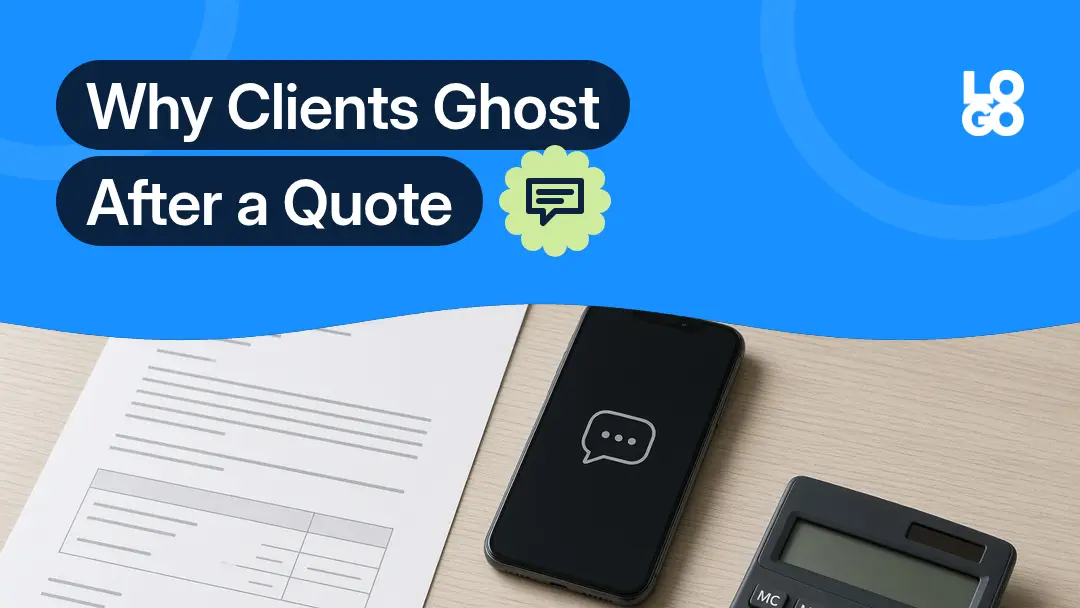
Clients ghost after you send a quote because the number reached them without the reasoning that makes it add up. A bare figure sitting in an inbox gives the client nothing to weigh it against, so going quiet feels safer than starting a conversation. You fix this by naming a budget range on the discovery call, sending your proposal within one working day while the conversation is still warm, offering three scoped options instead of one flat price, and following up on a schedule you set in advance. Framing beats discounting nearly every time.
The Silence Is Rarely About Your Rate
When a prospect disappears after seeing your price, your first instinct says the number was too high. Most of the time the number was fine and the context was missing. The client liked you, liked the work, then opened an email containing a figure and no way to judge whether that figure was normal. Nobody replies confidently to a question they cannot answer, so they do not reply at all.
Think about what the client actually knows at that moment. They know roughly what they want. They do not know what good work of this kind costs, what your figure includes, what would happen if they spent half as much, or how long they have to decide. A quote that answers none of those questions asks the client to do research they have no appetite for, and most people handle that request by putting the email in a folder and moving on.
There is also a volume problem working against you. Design and branding services attract an enormous number of new operators every year. According to LOGO.com data, business owners chose graphic design as their industry 27,943 times in the past 12 months while building a brand on LOGO.com. Your prospect is not comparing your quote to nothing. They are comparing it to a mental list of cheaper names they half remember, and your proposal has to do the work of explaining why that comparison is unfair.
The good news is that every one of those gaps closes with better sequencing rather than a lower price. You are not trying to convince anyone that you are cheap. You are trying to make the decision easy enough that saying yes takes less energy than saying nothing.
Qualify Before You Write Anything
A proposal is expensive to produce and free to ignore, which is a bad trade if you write one for everybody. Decide what you need to know before you agree to send a document.
Four things cover most of it. What outcome are they after, when do they need it, roughly what have they set aside, and who else signs off. If a prospect will not answer the last two, you are writing a proposal for a conversation rather than a project.
Ask about the approval chain directly and without suspicion. Plenty of ghosting comes from a keen contact who genuinely wanted to hire you and could not get the budget approved above them. You can help that person if you know they exist. Write the proposal so it survives being forwarded, with the reasoning visible and the outcome stated in language their boss will recognize.
Ask what they have tried already. A client who has been burned by a previous freelancer needs different reassurance from one who has never commissioned design at all, and the proposal that lands with each of them looks different. The first needs to hear about your process and your checkpoints. The second needs to hear what the finished thing will do for their business.
None of this is gatekeeping. It is the difference between sending five proposals a month and getting three replies, or sending 20 and getting two. The second version feels productive and quietly ruins your week.
Name a Budget Range on the First Call
Send pricing only after the client has heard a number from you out loud. The discovery call is where you find out whether this deal exists at all, and a five minute budget conversation there saves you a week of silence later.
Raise it yourself, early, and without ceremony. Once you understand what the client wants, tell them that projects of this shape usually land between one figure and another, then ask straight out whether that range works for them. You are not quoting. You are checking that you are both in the same room.
Three things happen when you do this. The client hears the number while you are still there to explain it, which means they react in front of you instead of privately. You learn immediately whether to keep going, scale the project down, or point them elsewhere. And you set the reference point for everything that follows, which matters more than most freelancers realize. Harvard's Program on Negotiation has written at length about price anchoring and how strongly the first number shapes where a deal lands.
Watch what happens in the client's face and voice when you say the range. Genuine surprise looks nothing like a polite pause. If they flinch, ask what they had budgeted. If they name a number far below yours, you have just saved yourself the proposal. If they nod, you now have permission to write the document, and the price inside it will not be a shock.
The freelancers who dread this moment tend to bury it. They keep the call warm and pleasant, promise to send something over, then wonder why the warmth vanished. The number was always going to arrive. You only choose whether it arrives with you attached to it.
Send the Proposal Within One Working Day
Momentum is a real asset and it decays fast. A client who felt excited on Tuesday afternoon has had four other conversations by Thursday, and your proposal now lands on someone who has cooled off and half forgotten which parts they were keen on.
Aim to send within one working day. Same day is better. This is easier than it sounds once you stop writing every proposal from scratch. Build one document you reuse, with your scoping language, your process, your timelines, and your terms already written, then spend your time only on the two or three paragraphs that belong to this client.
Reference the call directly in the opening. Name the thing they said they were worried about, in their words. A client who reads their own concern in the first paragraph knows you were listening, and that alone separates you from the person who sent a generic rate sheet.
Say when you need an answer. Not as pressure, as logistics. Tell them which start date you are holding and until when. A proposal with no deadline invites indefinite delay, and indefinite delay is what ghosting actually is most of the time. Nobody decided against you. They just never reached the point where deciding felt necessary.
Attach nothing that forces the client to hunt for the price. If somebody has to scroll past nine pages of process to find the number, they will jump to the number first and read it with no context, which is the exact problem you were trying to avoid.
Give Three Options Instead of One Number
A single price is a yes or no question, and no is always the safer answer. Three options turn the conversation into a choice about scope, which is a far easier thing for a nervous client to engage with.
Build the middle option as the one you actually want them to take. Put the work you know the project needs in there, price it properly, and describe it in the most detail. The option above it should include the things clients usually come back and ask for three months later, priced honestly. The option below it should be a genuinely smaller piece of work rather than the same project done worse.
That last point matters more than it looks. A cheap tier that quietly strips out the parts that make the work succeed sets you up to deliver something you are not proud of. Reduce the scope instead. Fewer pages, fewer rounds, a narrower brief, a longer timeline. The client trades something real for the lower price and understands exactly what the trade was.
Something useful happens the moment you present three numbers. The client stops asking whether they can afford you and starts asking which version fits. You have moved the question from your value to their priorities, and their priorities are something they are perfectly happy to discuss.
Keep the options simple enough to compare in under a minute. Three tiers, a short description each, one price each, and a clear note on what is not included. If a client has to build a spreadsheet to understand your pricing, you have handed them homework rather than a decision.
Resist the urge to add a fourth and a fifth option. More choices feel generous and read as indecision. Three is enough to give the client control and few enough that the middle one stands out.
Write the Proposal Around Outcomes
Deliverables tell a client what they get. Outcomes tell them why the number is reasonable. Most proposals list the first and skip the second, which leaves the client doing valuation work they are not equipped to do.
Compare two lines. One says a homepage, four inner pages, and two rounds of revisions. The other says a site that answers the questions your customers currently email you about, so your inbox stops carrying that load. Both describe the same job. Only one gives the client something to weigh the price against.
You do not need to promise revenue figures you cannot control. Be specific about the problem instead. The client told you something on the call about what is going wrong. Write the proposal as the answer to that, and the price becomes the cost of solving a named problem rather than the cost of some hours.
Include what you are not doing, in plain terms. Freelancers avoid this because it feels negative. Clients read it as competence. A scope that names its own edges tells the client you have done this before and that nothing unpleasant is waiting for them in week three, and both of those thoughts make a signature easier.
Then say what happens next in one short line. Which button they press, what you need from them, when you can start. A proposal that ends without an instruction ends in a pause, and pauses are where deals go quiet.
Make the Proposal Look Like the Work
You sell design, so your proposal is a work sample whether you intended it that way or not. A client deciding whether to trust you with their brand will draw conclusions from the document in front of them, and a plain attachment with mismatched fonts quietly argues against your rate.
This does not mean over designing the thing. It means consistency. Your logo where it belongs, your colors, one typeface used properly, generous spacing, and page numbers. Clients cannot always name what makes a document feel expensive, but they respond to it, and that response arrives before they reach the price.
The same logic applies to everything touching the deal. The email address you send from, the file names, the invoice that follows. Each one either supports your number or undercuts it. Keeping those assets in one place turns this into a habit rather than a chore, which is exactly what a brand kit is for.
Send a PDF rather than an editable file. Send one document rather than five attachments. Name the file something the client can find again in three weeks when they finally come back to it. These sound trivial next to the pricing conversation, and they are the details that decide whether the pricing conversation ever resumes.
Follow Up on a Schedule You Set in Advance
Decide your follow up sequence once, then run it on every deal so you never have to judge in the moment whether chasing feels desperate. It never does when it is a system.
Three messages over two weeks works well. The first goes out three days after the proposal and asks one specific question about the content of the document rather than asking whether they had a chance to look. The second goes out a week later and adds something small and useful, a relevant example, a note about timing, one line of thinking about their problem. The third goes out at the two week mark and closes the loop honestly. Tell them you are releasing the start date you were holding and that they should reach out whenever the timing improves.
That third message does more work than the other two combined. It removes the awkwardness the client has been sitting in, and a surprising number of them reply to it. Silence often means a client feels bad about not answering rather than that they lost interest. Giving them a graceful exit frequently produces the opposite.
Never make the follow up about you. Asking whether they have thought any more about it puts the client in the position of apologizing, and people avoid that by staying quiet. Asking whether the phased timeline or the single build suits their launch date gives them something easy to answer.
Then stop. Three messages, then out of the pipeline and into a note you revisit in three months. Chasing past that costs you energy you should spend on the next lead, and it teaches you nothing you do not already know.
Hold Your Rate Without Apologizing
When a client says the price is high, they are usually not asking you to lower it. They are asking you to justify it. Those two requests sound identical and the correct responses could not be more different.
Answer with scope, never with a discount. If the budget really is smaller, say what you would remove to reach it. This keeps your rate intact, shows the client exactly what their money buys, and hands them a real decision. A freelancer who drops 15 percent the moment somebody pushes has taught that client the first number was fiction, and the lesson applies to every project after this one.
Say your price and then stop talking. The urge to fill the silence with qualifiers is where most rates get lost. You do not need to explain that you know it is a lot, or that you could be flexible, or that you understand budgets are tight. State the figure plainly and let the client respond to it.
Some clients will always take the cheapest available option and no amount of framing changes that. Losing work to much cheaper competitors is a positioning problem sitting one level above your pricing, and it deserves to be solved on its own terms rather than by shaving your rate.
The last piece is the hardest. Charge an amount you can say out loud without your voice changing. If your rate makes you uncomfortable, the client hears it and reads that discomfort as a signal the number is soft. Either build the evidence to be comfortable at your rate, or set a rate you can defend calmly today and raise it once the work behind you supports more.
When a Client Truly Cannot Afford You
Sometimes the budget really is not there, and recognizing that quickly is a skill worth building. Your goal in that situation is a clean ending rather than a rescued deal.
Tell them plainly what the work costs and what you could do inside their budget, if anything. If the honest answer is nothing useful, say so and point them somewhere sensible. Clients remember that. A referral costs you nothing today and returns often, because the business that could not pay you this year is frequently the one that can next year, and it comes back already knowing your number.
Then look at where the lead came from. A pattern of prospects who cannot afford you is a marketing problem sitting upstream of your pricing. Changing the channel, the language on your site, or the type of project you describe will do more than any script, and the way you attract freelance clients decides how many of these conversations you have to survive in the first place.
Frequently Asked Questions
Should you put pricing on your website?
Publishing a starting figure filters out the wrong leads before they ever reach your calendar, and that is usually worth more than the inquiries you lose. One line saying projects typically start from a given amount does most of the work. Avoid publishing a full menu unless your scope genuinely never varies, because a fixed list invites clients to shop line items rather than discuss the project.
Do you give a price on the call or send it afterwards?
Give a range on the call and send exact figures afterwards. The range keeps the client with you while they process the number. The written proposal gives them something to share internally and something to reread. Doing only one of the two is what creates the gap where clients disappear.
How long should you wait before following up?
Three days for the first message, a week for the second, then two weeks for the third and final one. Shorter than three days reads as anxious. Longer than a week between messages lets the project drift into next quarter. Keeping the same rhythm on every deal means you never have to decide whether today is the right day.
What do you say when a client asks for a discount?
Ask what budget they are working with, then show them what fits inside it. Move scope rather than price. If they want the full project at a lower number, tell them plainly that the full project costs what it costs and offer the smaller version instead. Most clients accept this. The ones who do not were rarely going to be easy to work with.
Is ghosting always about money?
No. Clients also disappear because the person you spoke to needs approval they have not got yet, because a competing priority appeared, or because your proposal did not give them the words to sell the project internally. Writing your proposal so it can be forwarded and understood without you in the room removes the most common of those blockers.
How many options should a proposal contain?
Three. One is a yes or no question, two feels like a trick, and four or more turns a decision into research. Three tiers let the client choose scope while keeping the middle option clearly recommended.
Turn Every Quote Into a Piece of Your Brand
Ghosting after a quote is almost always a sequencing problem wearing a pricing costume. Talk money early, send fast, offer three scoped choices, write about outcomes, follow up on a fixed rhythm, and hold your number without flinching. None of that requires charging less.
What it does require is that every document you send looks like it came from a business rather than an inbox. Your logo, your colors, your fonts, applied the same way every time, on the proposal and the invoice and the message that follows. LOGO.com gives you a logo and a full brand kit you can apply across all of it in minutes, so the next quote you send makes your price look like the obvious answer rather than an open question. Build your brand on LOGO.com and let the paperwork do some of the selling for you.
Recent posts
Oct 19, 2026 by: Sean Baker
Oct 14, 2026 by: Vanessa Lam
Oct 12, 2026 by: Sean Baker
Oct 5, 2026 by: Sean Baker