How to Get Cleaning Clients for a New Business
Wondering how to get your first cleaning business clients? Here are the channels, offers, and follow ups that book recurring jobs.
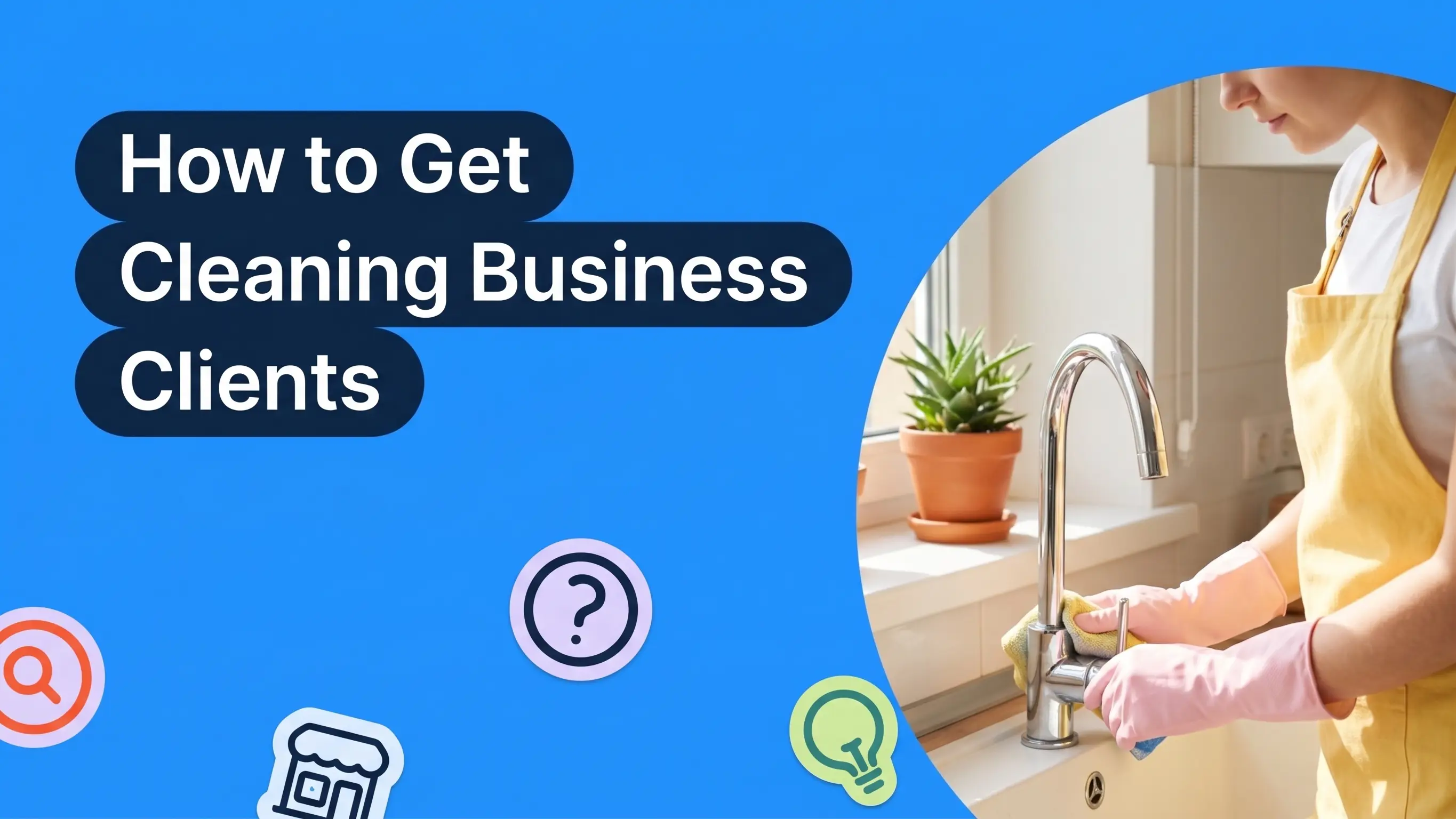
To get your first cleaning business clients, focus on three channels that work fast. First, post in local Facebook groups, Nextdoor, and your city subreddit with photo proof, a clear price, and a same week opening. Second, knock doors in the neighborhoods you want to clean and leave a friendly postcard with a QR code. Third, ask every paying customer for one referral and reward them with a free clean after the new lead books. Used together, these three steps can book your first five recurring jobs inside a month.
Why finding cleaning clients feels harder than it should
Open any active local Facebook group and you'll see the same pattern. Someone posts "looking for a cleaner near Smithtown" and 30 businesses jump into the comments inside an hour. Your message lands buried under the other twenty nine. Most cleaners reply with one line and a price, and that line looks the same as everyone else's. The market is crowded, the buyers are busy, and your replies often disappear into a thread no one reads twice.
The good news is that crowded markets reward consistency, not loud bursts. Every cleaner who posts once and then waits gives up the chance to win the next ten leads that come through. You don't need a bigger ad budget to beat them. You need a small repeatable system that puts you in front of the right households every week, even when you're scrubbing a tub for a paying client across town.
That system has three pieces. The first is a tiny online presence that looks legitimate in 10 seconds. The second is a daily marketing routine that takes 30 minutes and runs whether or not you booked a job that day. The third is a referral loop that turns each new customer into the source of the next two. Get those three working together and the leads stop feeling random. You stop refreshing your inbox and start watching it fill.
This guide walks through each one in the order you should set them up. None of it requires a paid ad budget, a paid lead service, or a fancy website. You can build the full system in a weekend with a phone, a printer, and free tools. Each section ends with a small action you can finish that day, so the whole thing reads more like a checklist than a course.
According to LOGO.com data, cleaning service is by far the most common cleaning category new business owners pick when starting a brand on the platform, accounting for around 51% of cleaning brands. Window cleaning sits at about 5%, house cleaning at 4.6%, and carpet cleaning at 2.1%, with the remaining share spread across niches like pool cleaning, dry cleaning, and pressure washing. The market is crowded at the top, but the long tail of cleaning niches is wide, which means a sharper focus on a single specialty often beats trying to win the generic cleaning service search.
Build the smallest possible online presence before you market
Before you knock a door or post in a group, give yourself a place to send people. Most new cleaners skip this step and learn the hard way. They post in a Facebook group, a neighbor messages "tell me more," and they spend the rest of the evening typing the same answers about pricing, supplies, and scheduling. A small online presence answers the obvious questions on its own and turns more of those messages into bookings while you sleep.
You need three things. A simple one page site with your service area, your prices, your photos, and your booking link. A Google Business Profile so neighbors can find you when they search "cleaner near me." And a logo and color palette so your flyers, your postcard, your group posts, and your invoices all look like the same brand. A consistent look earns trust faster than any sales line you'll type into a group thread.
You don't need a designer for this. You can build a logo and brand kit in under an hour, then carry the colors and font into your one page site, your social bios, and your printed materials. Aim for clean, friendly, and adult, not playful or generic. Cleaning buyers want a service that feels reliable. Your visuals should look like the home they're paying you to clean, so keep them tidy, calm, and uncluttered. Skip cartoon mascots, glittery type, and overused stock graphics.
Pick a single color and stick with it across every surface. A warm sage, a soft navy, or a friendly mustard reads as professional and remains memorable in a sea of generic blue cleaning logos. Match the color to your uniform if you wear one, your supply caddy, and the corner of every photo you share. Repetition builds recognition. By the time a neighbor sees your post for the third time, they'll already feel like they know you.
If you want a quick checklist for the brand piece, our building a brand guide walks through the full process from logo to font to color palette.
Post in local Facebook groups, Nextdoor, and your city subreddit
Local social platforms book the first jobs for most new cleaners. The friction is low. The buyers are warm. And the trust signal of a neighbor commenting "she did our place last week" beats almost any paid ad you could buy this month. The platforms are also free, which matters when you're spending your first dollars on supplies and insurance.
Start with three platforms. Pick the two or three biggest Facebook groups in your county or town. Add Nextdoor for your neighborhood and the four or five neighborhoods next to yours. Add your city subreddit if it exists. Together these are the rooms where "anyone know a good cleaner" gets posted, often more than once a week. Join all of them, mute the noisy ones, and turn on alerts for the rest.
Your first job in each room is to show up and be useful before you sell. Comment on five or 10 unrelated posts a week. Help a neighbor find a plumber. Welcome someone new to the area. Drop a tip about a local restaurant. The algorithm and the moderators both notice who participates and who only drops sales messages. You want to look like a neighbor, not a faceless business looking for a quick sale.
Once you've built a small footprint in each group, post a short introduction. Include your name, your service area, the kinds of homes you clean best, a starting price, and one or two photos of finished work. Skip the long story. Keep it under five sentences. End with a friendly opening like "I have two slots open this week if anyone wants to try us out." Pin it to the top of your business page so newcomers see it first.
When a "looking for a cleaner" post appears, reply fast and reply in a way that stands out. Most cleaners post a single line and a price. You should reply with one sentence, a photo of recent work, your starting price, and a same week opening. Then send a direct message. The buyer almost always books the person who shared photos and offered a clear next step inside the first hour after posting.
Knock doors with a postcard people want to keep
Door knocking still works. Most new cleaners skip it because it feels uncomfortable, which is exactly why it works. The cleaners willing to walk a block for 90 minutes will beat the ones who only post online. You don't need to pitch on the doorstep. You just need to leave something people will glance at when they get the mail and tuck on the fridge for later.
Print a small postcard. Five inches by seven inches is plenty. On the front, put your logo, your service area, and one big benefit like "Move In Ready Cleans From $149." On the back, list what's included, your phone number, and a QR code that goes straight to your booking page. Print 200 of them at a local print shop or order them online for around $40. Splurge on a thicker matte stock so the card feels like a keeper, not a flyer.
Pick neighborhoods that match the homes you want to clean. New construction, condos near a hospital, and gated communities with older residents are good targets. Tuesday and Wednesday afternoons see the highest answer rates because people are home but not running errands. If someone opens the door, smile, hand them the postcard, and say "I run a local cleaning company and I'm offering a discount for new clients on this block this month. Would you like one?" If they say no, thank them and move on. If they say yes, take their phone number and follow up by text within four hours.
Out of every 100 doors, expect two or three solid leads and one booked job. Walk 300 doors over three weeks and you'll have your first recurring client. The math is unglamorous, but it's reliable. And every postcard left behind keeps working for weeks after you've gone home, which is part of why direct mail still drives strong response rates for local service businesses.
Build a photo strategy that wins the next book
Photos do the work your sales pitch can't. A buyer scrolling past 30 cleaner replies in a Facebook thread will pause on the one with a clean before and after shot. The cleaners who show their work book more jobs than the cleaners who describe it. Build a simple photo habit on your first paying job and the next 20 leads close themselves.
Shoot every clean from the same three angles. A wide before shot of the kitchen, a close up of a stovetop or a sink, and a tidy after shot from the same wide angle. Use natural light from a window if you can. Skip flash. Skip filters that change the color of the counter. Buyers want to see real homes, not magazine spreads, and a faked photo erodes trust the moment they walk into the actual living room.
Ask permission in your booking confirmation, not on site. A short line like "we sometimes share before and after photos online and never include faces or addresses" gets a yes from most clients before they ever see you. The ones who decline still book the clean. The ones who say yes give you a steady stream of social content without you ever having to stage a single shot.
Save the best 10 photos in a private album on your phone and reuse them. The same shot can anchor a Facebook post on Monday, a Nextdoor recommendation reply on Wednesday, and a Google review request screenshot on Friday. Photos compound. The longer you keep the habit, the more the album works as a portfolio you can drop into any conversation that needs proof.
Use referrals to turn one paying client into five
Referrals are the cheapest leads you'll ever get. A neighbor who says "we used her, she was great" closes the next buyer in seconds. The trick is asking for the referral the right way and making it easy for the giver to actually send one. Most cleaners ask too late, too vaguely, or never at all, and they leave the easiest growth on the table.
Set a rule for yourself. Every paying customer gets a referral ask within 48 hours of the first clean. Make it specific, not vague. "Do you know one other person on the block who would like a clean next month?" beats "if you know anyone, send them my way." Specific asks land. Vague asks evaporate. The 48 hour window matters because the home still smells like the clean, the floors still shine, and the customer is still talking about you to anyone who walks in.
Pair the ask with a reward. The cleanest structure is a free clean after the referral books. Not a discount, not a gift card, a free clean. Cleaners who offer cash run into awkward conversations. Cleaners who offer a discount cap the value. A free clean costs you one slot in your calendar, which feels small compared to the lifetime value of a recurring customer who books you monthly for two years and refers two more along the way.
Make it easy to share. Send your existing customer a short message they can forward. Include your booking link, a one line description of the offer, and a single photo. The fewer steps they have to take, the more likely they are to actually forward it. Three sentences is the sweet spot. Anything longer reads like marketing copy and gets ignored.
The math compounds quickly. Five clients who each refer one new client gives you 10. Half of those 10 refer one more and you're at 15. By month six, half of your new leads can come from referrals alone, which means your marketing time drops as your roster grows. Keep the routine tight in the first three months and the routine starts working for you in month four.
Price for recurring work, not one off cleans
A cleaning business lives or dies on recurring revenue. A one off deep clean is nice. A weekly or biweekly client is a paycheck. Your pricing structure should make the recurring option look like the obvious choice, not the upsell. Buyers default to whatever you present as the easiest path, and your job is to make the recurring path feel like the default.
Quote three options every time. A weekly clean at your lowest per visit rate. A biweekly clean at a small premium. A monthly or one off clean at the highest per visit rate. Put the weekly option in the middle of the page. Most buyers anchor to the middle option, and the price gap should make the weekly clean look like the smartest pick. Show the math in plain language so they don't have to do it themselves.
Avoid quoting hourly. Hourly rates train the customer to watch the clock and squeeze the visit. Flat per visit rates train the customer to value the result. If you're worried about a home taking longer than expected, add a line in your booking form that says "first clean may include an upcharge if the home hasn't been cleaned in over 30 days." Buyers expect that. They don't expect a $40 hourly increase three rooms in.
Hold your prices. New cleaners are tempted to discount when a buyer hesitates. Hesitation almost always comes from doubt about quality, not price. A discount makes the doubt worse. Instead, offer a smaller first visit, like a single bathroom and kitchen for $89, so the buyer can try you without committing the full rate. Once the trust is there, the recurring rate is easy to lock in and the buyer feels like they earned the upgrade.
Show up on Google so neighbors can find you
A Google Business Profile is the highest leverage free marketing asset a new cleaner has. When a neighbor searches "house cleaning near me," the top three results in the local map pack book the call. Most new cleaners never set one up, which is good news for you. A 30 minute setup this weekend can outperform a year of paid Facebook ads.
Create your profile this week. Use your business name, your service area, and a clean photo of your team or your branded supplies. Add your hours, your phone, and your booking link. Pick the most specific category Google offers like House Cleaning Service, not the generic Cleaning Service. Specificity helps you rank for the searches that actually convert, and broad categories rarely outperform niche ones in the map pack.
Then collect reviews. Five star reviews from real local customers move you up the local map pack faster than any other signal. After every clean, send a short text thanking the customer and asking for a review with a direct link. Aim for 10 reviews in your first 60 days. After that, aim for one new review a week. A profile with 50 reviews ranks higher than a profile with five, and the gap compounds month by month as the reviews stack.
Combine the profile with light local SEO. Add your city and neighborhood names to your site, list your service area on your booking page, and ask happy clients to mention their neighborhood in their review. Our local SEO basics post walks through the full setup if you want a deeper guide.
Frequently asked questions
How long does it take to get your first cleaning client?
Most new cleaners book their first paying client inside two weeks if they post in local Facebook groups, hand out postcards, and ask friends to share their booking link. The first client almost always comes from a warm channel like a neighbor or a friend, not a cold lead, so the warmer your starting network, the faster the first job lands.
How many flyers or postcards do you need to print?
Print 200 postcards to start. That covers two to three weekends of door knocking and a few leave behinds at coffee shops, community boards, and local gyms. Track which neighborhood each postcard came from so you know where to focus next month and where to skip entirely.
Should you charge less than your competitors to start?
No. Charge slightly above the cheapest cleaner in your area and lean on quality, photos, and reviews to justify the rate. Buyers who pick the cheapest option churn fastest. Recurring buyers want a clean they can trust without thinking, and they're happy to pay $20 more for it every visit.
What if no one responds to your first few posts?
That's normal. Most cleaners need three to five posts in a group before a neighbor recognizes the name. Keep showing up, commenting on other posts, and dropping useful tips. The first booking usually follows around post number five or six, not post number one. Treat the first month as warmup.
How do you handle a client who tries to negotiate your price down?
Stick to your rate and offer a smaller package instead. "I can do a single bathroom and kitchen for $89 so you can see the quality, then we can book the full home if you like it." Buyers who push back on price often book quickly when they have a low risk way to try the service first.
Start with the smallest brand that builds trust
The biggest mistake new cleaners make is waiting for the perfect website, the perfect logo, and the perfect uniform before they start marketing. You don't need any of that to book your first 10 clients. You need a clear name, a small set of photos, a recognizable color, and a place to send the people who say yes. Everything else is decoration.
Build a logo and color palette in under an hour, set up a one page site with your service area and your booking link, and put both on every postcard and group post you publish. The brand piece signals trust before you ever meet the customer. The marketing pieces above turn that trust into bookings. Layered together, they make the first month feel less like a guessing game and more like a process you can repeat.
If you want a fast way to get the brand piece done before you knock the first door, you can start with LOGO.com and have a logo, a font, a color palette, and a one page site live the same evening. From there, the system in this guide turns those assets into your first five recurring clients.
Recent posts
Oct 19, 2026 by: Sean Baker
Oct 14, 2026 by: Vanessa Lam
Oct 12, 2026 by: Sean Baker
Oct 5, 2026 by: Sean Baker