How to start a weekend wedding officiant business
Around 40% of US couples now hire an independent officiant they found online. Weekend operators clear $5,000 to $20,000 a year. Here is the six step playbook to build a wedding officiant practice from your own brand.
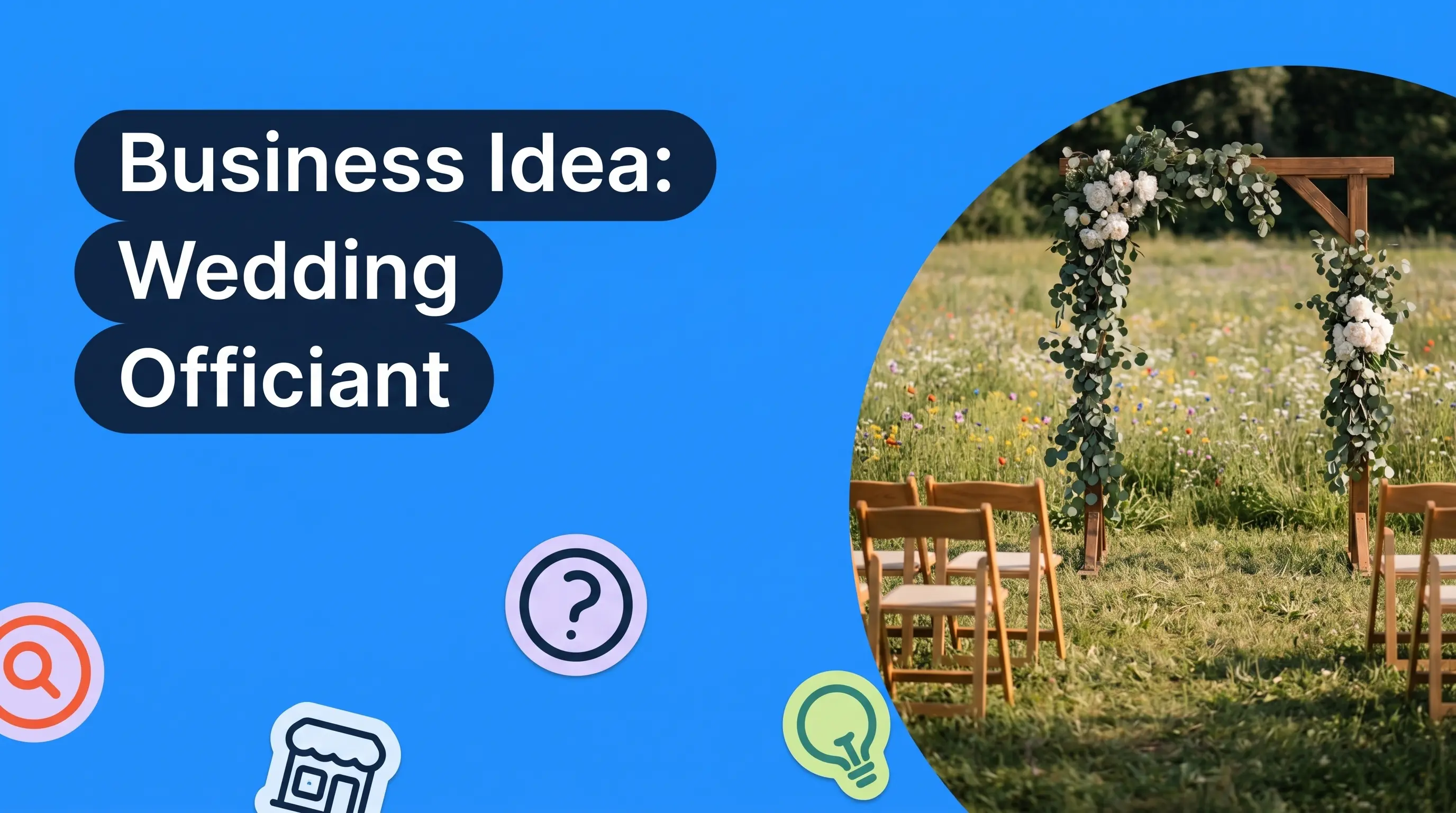
The fastest growing corner of the wedding industry is not a venue or a photographer. It’s the friend or independent officiant a couple found online instead of a church minister. According to The Knot's 2026 Real Weddings Study, 67% of couples spending under $12,000 now use a friend officiant to keep their celebration personal, and the operators who turn it into a weekend business are quietly clearing $5,000 to $20,000 a year doing one or two ceremonies most Saturdays.
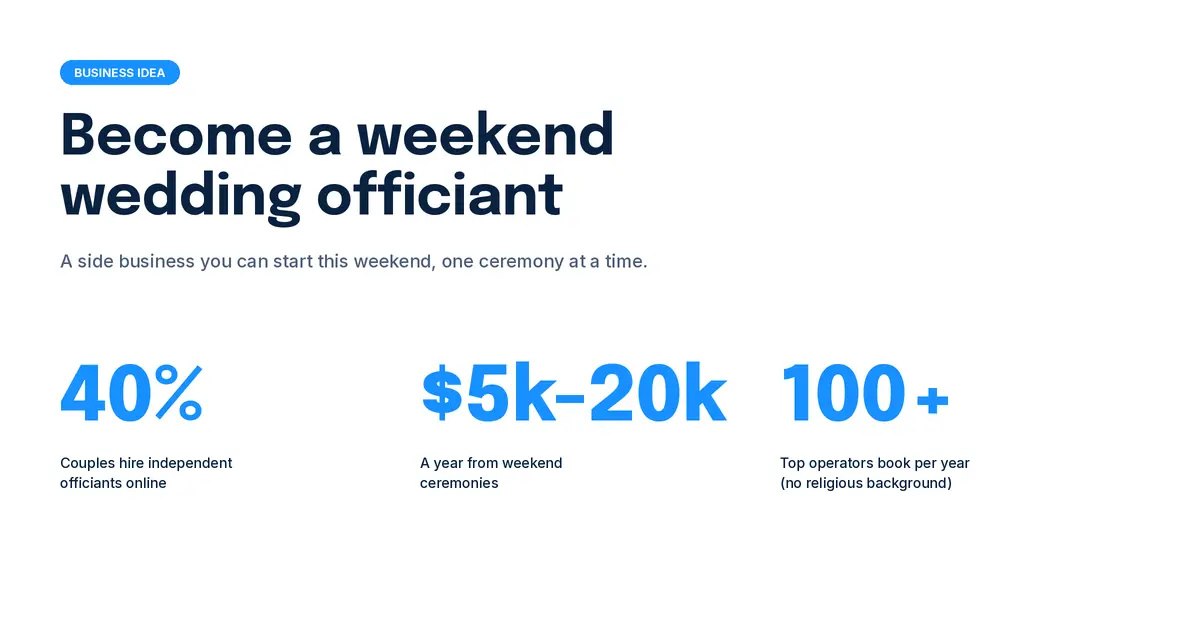
Most operators did not come from a religious or legal background. Marry Me In Indy in Indianapolis has been a husband and wife practice run by Victoria and Peter Meyer for over 15 years. Ceremonies by Bethel in San Diego is Bethel Nathan's solo practice with over a decade of work and 900 ceremonies behind her. The credential they all started with is the same one you can get this weekend: free ordination from the Universal Life Church, which takes five minutes online.
What the rest of the practice looks like is what we are going to break down. Six steps from thinking about this to the first venue partnership paying you to keep going.
Why couples want you instead
Couples want personality more than tradition. Generic clergy templates feel performative. A friend or an independent officiant who actually knows them feels real. Most couples do not have a friend they trust to officiate publicly, so the next best thing is an officiant who treats the ceremony as a piece of writing.
That is the gap you are stepping into. Couples find you through three channels: your website, a directory listing, and a referral from a venue or planner. Once you have the brand and the bookings, the rest compounds.
The math of a weekend operation
A standard ceremony fee sits between $400 and $1,000 in most US markets. Elopement specialists at the top of the market charge $1,500 to $3,000. A weekend operator doing one or two ceremonies most Saturdays from April through October will see 20 to 30 ceremonies in a year, which lines up with the $5K to $20K range above.
The catch: most of those bookings happen six to twelve months in advance. Your first season is a slow build of three or four ceremonies. By your second season, the calendar fills itself.
Here is how to get from where you are now to that second season.
Step 1: Pick a business name
The name carries more weight than people expect. Couples screenshot it and send it to their group chat. They Google it before they email you. They put it on their wedding website.
Open LOGO.com's business name generator and try a few patterns: a place name plus Officiant or Vows, a noun and a verb together, a single evocative word. Pick something a couple would actually want to write on their save the date. If you would be embarrassed to put it there, keep trying.
Three good options is enough. The first one you instinctively type into your phone is usually the answer.
Step 2: Build the brand around it
A logo, a matching domain, and a one page site turn a hobby into a practice that couples take seriously. This is the foundation everything else sits on.
The brand is what venues and planners see before they ever meet you. The website is where couples land before they book a discovery call. The domain is what gets passed in word of mouth referrals. None of these need to be elaborate. A clean wordmark, a memorable .com or .online address, and a single page that explains who you are, what your ceremonies feel like, and how to book a discovery call.
LOGO.com generates the logo and the matching domain in the same flow, then sets up the website. Budget an evening for this and you will have a brand by morning.
Launch a brand and website in minutes
Step 3: Get ordained and set up bookings
Two things need to happen before your first ceremony. You need to be legally allowed to officiate, and you need a way for couples to book you that does not fall through the cracks.
Universal Life Church ordains you online in five minutes. It is free and recognized in 49 states. Some states (Virginia and Nevada are the famous ones) require you to register with the county before performing a ceremony. Check your state's rules before your first booking, not after.
For booking, HoneyBook handles the operational stuff that would otherwise eat your Sundays. A couple lands on your site, books a discovery call, signs a contract, pays a deposit, and you get a notification. The starter plan is $19 a month after a free first month. That setup pays for itself with the first booking it saves you from losing.
Step 4: Book your first three ceremonies
Three ceremonies is the threshold. Once you have three in your portfolio, the next ten arrive almost on autopilot.
Post on your personal Instagram and Facebook that you are now officiating, with a couple of sentences about why and a link to your site. Charge $300 for these first three to lower the friction of saying yes. Friends of friends who are engaged will message you within a week. The bookings will not all line up for the same season, but they will arrive.
Treat the first three like investments. Take photos with the couple. Ask for a one sentence testimonial. Add both to your site. You are building proof, not income.
Step 5: List on the wedding directories
The Knot, WeddingWire, and Zola drive most independent officiant inquiries in the US. Create profiles on all three. Each takes 20 minutes.
Three things make a directory listing convert. A clear, recent photo. A sample paragraph from one of your ceremonies. A starting rate that signals quality without scaring away the budget conscious. List your rate at the lower end of your range and earn raises from there.
By your second season, directory leads should be outpacing word of mouth referrals.
Step 6: Raise your rate at ten ceremonies
The moment your portfolio crosses ten paid ceremonies is the moment your weekends start booking themselves.
Raise your base rate to $1,000 per ceremony. Email five wedding planners and five venues you would genuinely recommend, introducing yourself and offering them a 10% finder's fee for any referral that books. One of them will say yes. The first venue partnership is when weekends stop being a side hustle and start being a real business.
Most operators stay there. One or two ceremonies most Saturdays from April through October, $1,000 a ceremony, $20,000 a year for what is genuinely satisfying work. The handful who want more push into elopements and destinations and book 50+ ceremonies a year. Both paths start from the same first ten.
Summary
A weekend wedding officiant business runs on three foundational moves: a free ordination, a real brand that signals professionalism to couples, and a portfolio of three ceremonies that earns the next ten. With those in place, a one or two ceremony Saturday cadence fits naturally around a day job, and most operators reach a $5,000 to $20,000 annual run rate inside their second season. When you are ready to start, open the business name generator and the rest of the playbook unfolds from there.
Recent posts
Oct 19, 2026 by: Sean Baker

Oct 14, 2026 by: Vanessa Lam
Oct 12, 2026 by: Sean Baker

Oct 5, 2026 by: Sean Baker