How to Market and Promote Your Small Business at Pop-Up Events
Pop-up events are more than a sales table; they’re a chance to build your brand. Here’s how to prep, promote, and convert foot traffic into loyal customers.
Pop-up events give you something online marketing can’t: instant access to foot traffic, in-person feedback, and real conversations with the people you’re trying to reach.
You’re not waiting on likes or hoping your ad lands. You’re there, face-to-face, answering questions, showing your product, and making a lasting impression.
They’re also one of the most practical ways to grow. You don’t need a long lease or a huge budget. Just a booth, a plan, and a clear message.
Here’s why pop-up events are worth looking into as a business owner.
4 Reasons Pop-Up Events Work for Small Business Owners
1. Pop-Ups Stretch Your Marketing Budget
Pop-ups let you show up for a day or a weekend, sell your products, and build awareness, with a much smaller investment than a traditional storefront. No monthly rent. No long-term commitment.
They also let you choose where to show up, like a farmers market that already attracts your ideal customer. That kind of targeted visibility is hard to get without paying for it.
2. They Build Brand Awareness That Sticks
Pop-ups feel special and time-sensitive, which naturally creates buzz. People are more likely to stop, take a photo, and share it.
They also remember you. Because when you have a real conversation with someone—or even just hand them a helpful flyer—it builds connection.
3. You’ll Get Real-Time Feedback
If you’ve ever wondered whether a new product would sell or if a new city is worth exploring, a pop-up is the easiest way to find out.
Every pop-up is a chance to listen:
- What questions do people ask?
- What do they love, hesitate over, or walk past?
- What made them buy?
These details help you refine your product mix, pricing, signage, and even the way you describe your offer—on your website, in your emails, and everywhere else.
7 Types of Pop-Up Events for Small Businesses
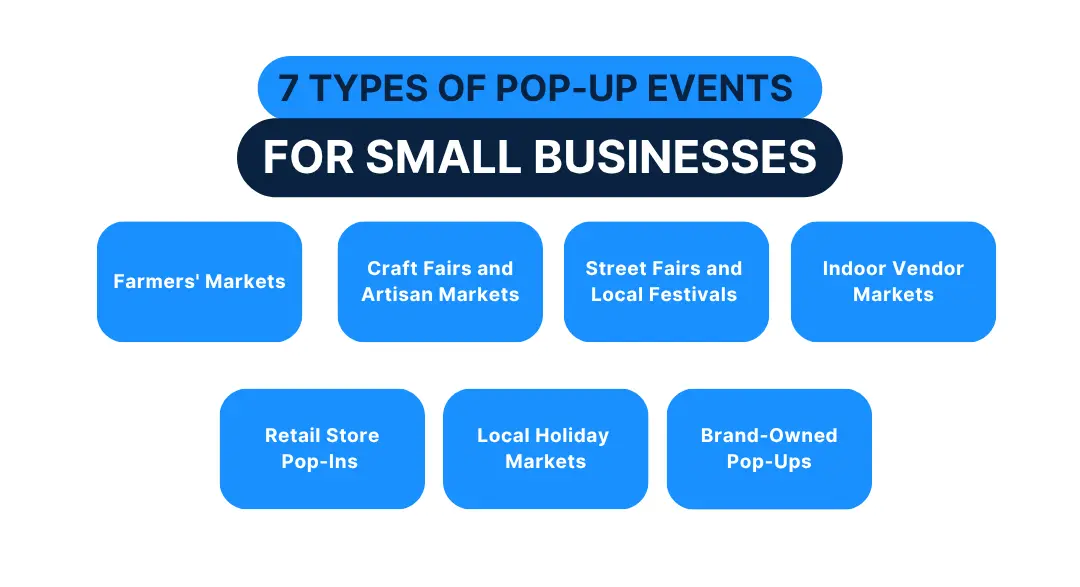
Pop-up events come in all shapes and sizes. Some are packed with foot traffic, and others are more niche. The best fit depends on what you’re selling and who you want to connect with.
Here’s a quick look at the most common types and what to expect from each:
1. Farmers' Markets: If your brand leans local, handmade, or all-natural, this is your crowd. These markets happen regularly, so you can build a loyal customer base over time. Just know that early mornings and weather are part of the deal.
2. Craft Fairs and Artisan Markets: Great for artists, makers, and anyone with a product that feels unique or gift-worthy. People come ready to shop, especially around holidays—but booth fees can run higher, especially at juried or curated events.
3. Street Fairs and Local Festivals: Big crowds, lots of variety, and a wide range of shoppers. These are great for visibility, but be prepared to compete for attention—there’s usually a lot going on.
4. Indoor Vendor Markets and Flea Markets: A solid option if you’re testing new products or want a low-key setup. Some feel boutique and curated, while others are more about deals and volume. Either way, these are usually easier to join and manage.
5. Retail Pop-Ins: Some small shops open their space to guest vendors. You’ll get in front of their customers (who are already in a shopping mindset), and it’s usually a lighter lift in terms of setup. Just keep in mind that space may be limited, and you’re sharing the spotlight with other local businesses.
6. Holiday Markets: High energy, lots of shoppers, and a great chance to move giftable items or seasonal bundles. They can be competitive to get into, so apply early and bring your best display.
7. Brand-Owned Pop-Ups: Want full control over the space, vibe, and schedule? Host your own. You can rent a short-term space or even repurpose your home or studio. You’ll handle all the logistics, but it’s a great way to build a deeper connection with your audience.
4 Materials That Turn a Pop-Up Into a Brand Moment
Some people will buy from you on the spot. Most won’t. That’s why what you bring to the table—literally—should help people remember your business, revisit you later, and share you with others.
Here’s what’s worth preparing:
1. Business Cards That Make It Easy to Come Back
Keep your business cards simple and professional. Include your logo, name, business name, website, and one reason to follow up (a QR code, discount code, or product tip).
2. Flyers or Postcards That Make Them Remember You
These are for people who liked what they saw but weren’t ready to commit.
Include a product photo, a sentence about what you do, and an easy way to stay in touch, such as a code for free shipping or a “where to find us next” link.
3. Email Sign-Ups That Lead to Real Follow-Up
Don’t make people guess why they should give you their email. A small sign that says “Want 10% off your next order?” or “Get notified about new drops and local events” is way more effective than “Sign up here.”
4. Branded Freebies That Travel With Them
You don’t need to bring a pile of merchandise. But a free sticker, mini sample, or reusable bag can turn a small purchase—or even just a good conversation—into something that travels home with them.
Get People to Show Up Before the Event Even Starts
Pop-up marketing starts before the table is set. Here’s how to get people to show up ready to see you, not just stumble across you.
Use Social Posts to Build Anticipation
Start posting on social media 5–7 days before the event. Keep it light and visual: product sneak peeks, behind-the-scenes prep, or just a “We’ll be at [Event Name] this weekend!”
Use location tags and event hashtags to get picked up locally.
Here are a few examples of what you can post:
- “Find us at Booth #42 this Sunday!”
- “Here’s what we’re bringing to [Market Name]”
- A photo of your last setup with a caption like “Back at it this weekend!”
Update Your Website to Point People in the Right Direction
Mention your pop-up on your homepage—even just a quick banner. You can also add it to your About or Contact page, especially if you do markets often.
Got a blog? A “where we’ll be” post can double as a newsletter or social link.
Send Emails to Bring People Out
Send one short email to your list a few days out. Use a strong subject line, one photo, and the key info: when, where, and why it’s worth stopping by.
Flyers That Work in the Real World
Still effective, especially in small towns or tight communities. Ask local cafés, gyms, or boutiques if you can hang one. Keep it visual and brief: brand name, what you’re selling, event details, and a QR code or Instagram handle.
LOGO.com Tip: Use your brand kit to keep all your materials—digital or printed—looking consistent and trustworthy. People decide in seconds whether a brand feels legit. Make sure yours does.
How to Promote Your Business While You’re at the Pop-Up
You’re not just there to make sales—you’re there to get remembered.
Every person who stops by your booth is a chance to grow your visibility, build loyalty, and create a clear path back to your business after the event.
Here’s how to make that happen:
Make Your Brand Easy to Find (and Easy to Remember)
Have your logo, business name, and website visible at a glance—on your signage, packaging, and even on your payment screen. If someone wants to look you up later, don’t make them search.
A QR code that links to your website, social media, or product page is a simple, high-return detail. Place it near the checkout, on your business cards, and any take-home materials.
Use In-Person Conversation to Guide Follow-Up
If someone compliments your product or says, “I love this, but I’m not ready to buy,” that’s a perfect cue to point them to your next best action:
- “We post our new drops on Instagram first—want to follow us there?”
- “If you ever want to order online, here’s the link—it’s all on our website.”
- “You’ll get early access to restocks if you’re on our email list. Want me to add you?”
You’re not pitching, you’re offering options, and that makes your brand feel helpful and worth remembering.
Send Them Off With a Reason to Come Back
Slip a branded postcard, flyer, or card into their bag with a discount code, a link to your website, or even just a note like “As seen at [Market Name]—shop online anytime.”
That small gesture extends your brand beyond the event. And when someone sees your name again—on Instagram, in their inbox, or at another pop-up—it builds recognition faster. To make following you effortless, share one link that points to your shop, socials, and sign up form.
Give People a Reason to Tag or Share
If your display looks good on camera and your products are easy to post, customers will do the marketing for you.
Make it effortless by:
- Adding a small sign: “Tag us @yourhandle”
- Creating a moment, like a fun branded backdrop or photo-friendly product setup
- Offering a small incentive for tagging (like a freebie, feature, or discount)
Social shares = new visibility, even from one customer.
Keep the Momentum Going After the Event
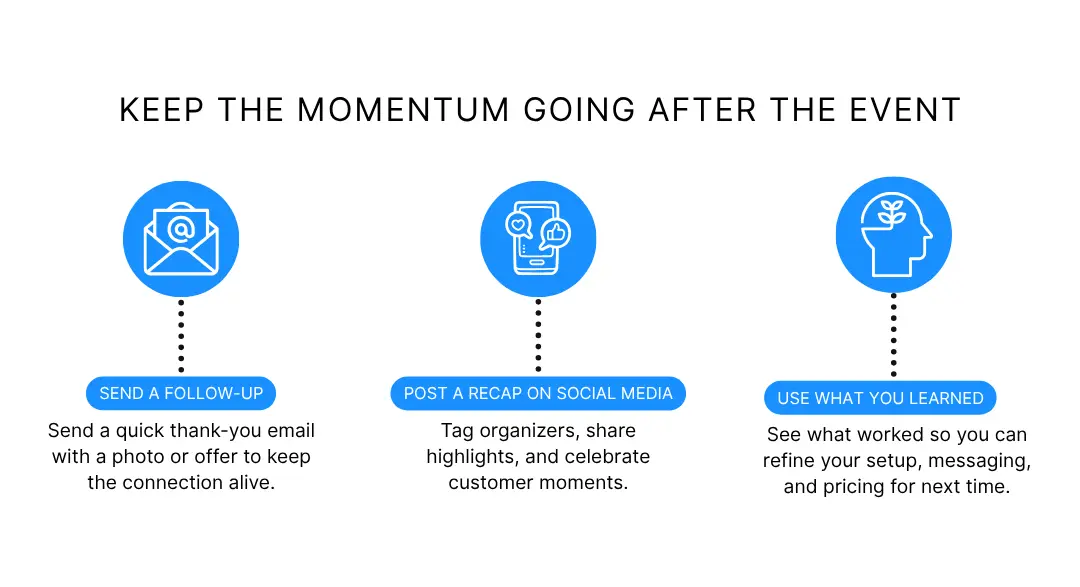
Just because the table’s packed up doesn’t mean your marketing stops. What you do after the event can turn a few good conversations into ongoing brand growth.
If you collected emails, send a quick thank-you while you’re still fresh in people’s minds. A simple note, a photo from the event, and a link to shop online are enough. A small discount or free shipping code doesn’t hurt either—it gives them a reason to come back.
On social, post a quick recap. Tag the event organizer, share highlights, and repost any customer tags or photos. It’s not just content—it’s proof that you show up, you connect, and your brand is worth following.
And before you move on, take a few minutes to jot down what you noticed.
What sold fastest? What questions came up over and over? Was there something people kept complimenting—or hesitating on?
That feedback is gold, and you can use it to fine-tune your pricing, simplify your signage, or update your website so it reflects what people care about.
From Pop-Up to Long-Term Growth
Marketing your business at pop-up events doesn’t have to be complicated. With a clear brand, a simple setup, and a focus on real connection, these events become more than sales opportunities—they become stepping stones to loyal customers and long-term growth.
LOGO.com gives you the tools to show up like a pro, even if you’re just getting started. From business cards to brand kits, everything works together to help your brand look polished and ready, wherever you set up next.
Recent posts
Oct 19, 2026 by: Sean Baker
Oct 14, 2026 by: Vanessa Lam
Oct 12, 2026 by: Sean Baker
Oct 5, 2026 by: Sean Baker