Tell Your Story, Build Your Brand: A Better Way to Write Your About Page
Struggling to write your About page? This guide helps you tell your story clearly, connect with customers, and build a brand that feels like you.
If you’re building a business, there’s a good chance you’ve already figured out how to talk about what you do.
But when it comes to writing about yourself? That’s where things can get a little tricky.
Your About page is often the first place someone goes to understand what your business is all about. And the truth is, they’re not looking for a perfectly polished origin story.
They’re looking for something honest, relatable, and helpful.
Every brand has a story worth telling, and you don’t have to be a writer or a marketing expert to create an About page that shares your story.
You just need to know what your audience is looking for and speak to them like a human.
How to Write an About Page That Connects
Think of your About page as a conversation. Someone’s just landed on your website, they’re curious about who you are, and they’re wondering if they’re in the right place.
This is your chance to answer that clearly and confidently. You don’t need to oversell or use fancy language. You just need to be clear, warm, and helpful.
Here’s what most visitors are hoping to learn:
- What you do and who you help.
- Why you started this business.
- What makes you trustworthy.
- How to take the next step.
You can cover all of that in a few short paragraphs. And the best part is that you already know the answers because you’ve been living them since day one.
1. Start With the Basics
The first few lines of your About page are like a handshake. They set the tone for everything that follows.
Before someone scrolls through your product catalog or checks out your pricing, they want to know: Who are you? What do you do? And is this the right place for me?
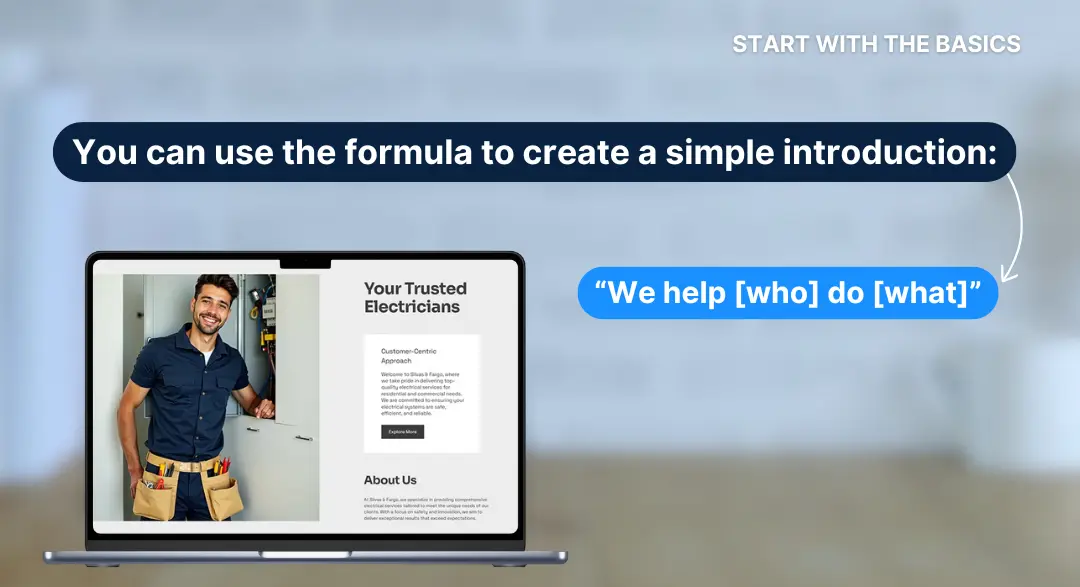
That doesn’t mean you need to lead with a big tagline or try to impress anyone. In fact, the most effective introductions are often the simplest because they focus on clarity, connection, and approachability.
Start by explaining what your business actually does, using everyday language your customer would recognize.
In other words: Be direct, not dramatic.
Instead of saying you “deliver personalized solutions,” try something more grounded, like “We help local businesses design logos and brand materials they feel proud to share.”
If you run a product-based business, you might say, “We make small-batch skincare with ingredients that are safe for sensitive skin and easy to understand.”
Once you’ve said what you do, make it personal to your target audience. Let your audience know who it’s for.
Are you serving busy parents? First-time founders? People who care about sustainability?
You don’t need to list out a full customer persona, but a simple, human sentence that names your people helps the right ones feel seen.
You can also use this space to reflect the kind of experience you want customers to have when they work with you. Not by saying “we offer excellent service,” but by describing what that actually looks like.
Do you prioritize fast turnaround? Thoughtful packaging? A collaborative design process?
The goal is to paint a picture of what it's like to work with or buy from your brand, without slipping into buzzwords or big claims. Because at this stage, you’re not trying to sell, you’re trying to make someone feel at home.
You’re saying: Here’s what we do, here’s who we care about, and here’s how we show up.
When you write from that place, people can tell.
2. Make It Feel Like You
Your About page doesn’t have to look or sound like anyone else’s. In fact, it’s better if it doesn’t. Your About page should look, sound, and feel like you. That’s what makes your brand stand out and be remembered.
So, let your natural voice come through in your writing.
If you’re casual in real life, be casual here. If you’re warm and thoughtful in how you speak to customers, let that tone carry over. Your About page should sound like something you would actually say, not like a corporate statement or an over-rehearsed pitch.
Visuals help create a more personal feeling, too.
A photo of you, your workspace, or even something simple like your product being made or packaged can give your About page texture. You don’t need a full brand shoot. Just something real and honest is enough to show there’s a person behind the business.
That’s what helps people connect.
3. Highlight What Matters to You
Every business has a reason for existing beyond just making money. Your values—what you care about, what guides your decisions, how you show up—are a big part of what makes your brand feel trustworthy and relatable.
You don’t need a long list or a perfect mission statement. Just take a moment to name the things that matter to you.
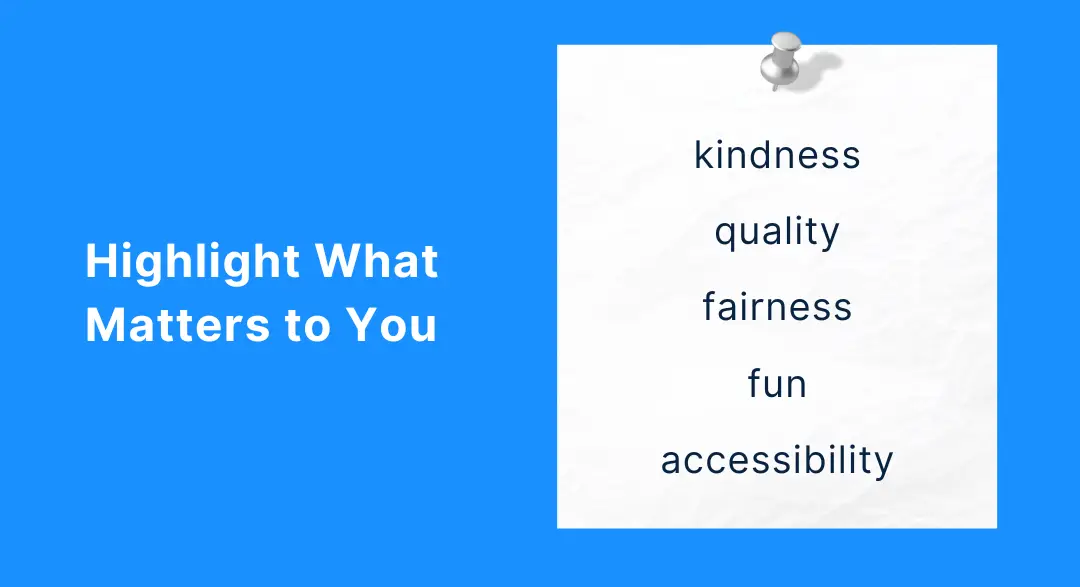
Maybe you built your business around accessibility because you know how frustrating it is to feel excluded.
Maybe you prioritize eco-friendly packaging, not because it’s trendy, but because you believe in taking care of what we’ve been given.
Maybe it’s as simple as treating people kindly—your customers, your vendors, your community—and always keeping your word.
Sharing those values shows that there’s a real person behind the product or service, and that person has a point of view.
The more open you are about what drives your business, the more likely you are to attract the kind of customers who want to support it, not just because of what you sell, but because of what you stand for.
4. Share a Bit of Your Backstory
You don’t need a sweeping origin story or a dramatic “I left my 9-to-5” moment to talk about how your business began.
What people are really looking for is a glimpse behind the curtain. Something real that helps them understand why this matters to you.
Whatever your story is, let it come from the place where this all started.
The late-night idea scribbled in your notes app. The frustration that pushed you to try. The love you had for making something by hand.
You don’t need to stretch it or turn it into something it’s not. Just open the door a little and let people see that there’s a human behind the brand.
5. Keep the Focus on Your Customer
The most powerful About pages create a sense of recognition.
Your reader should feel like you “get it.” Like you’re speaking with them, not just about yourself.
One way to do this is to picture your favorite customer, someone you’ve helped, someone who trusted you, someone who came back.
Think about what mattered to them, what made them feel comfortable, and what ultimately helped them say yes. Then write as if you’re talking directly to that person.
If you can make someone feel seen, they’ll remember you. And if they remember you, they’re already one step closer to becoming a customer.
6. End With What’s Next
Once someone has read your About page, connected with your story, your values, and your voice, they’re often left wondering: Now what?
This is your moment to gently guide them to take action.
You don’t need to make a hard sell or pressure anyone into action. A simple, thoughtful prompt is enough.
Invite them to browse your products, check out your services, sign up for updates, or get in touch with a question. Choose something that feels natural based on the relationship you’re starting to build.
It could be as casual as:
- “Curious to see what we’re working on? Take a look at our newest designs.”
Or as welcoming as:
- “If you’re thinking, ‘This sounds like what I need,’ reach out—we’d love to hear from you.”
The goal isn’t to close a deal on the spot.
It’s to keep the conversation going and make it easy for someone already interested to take that next step, whether it’s exploring your work or simply sticking around a little longer.
The Story Is Yours to Tell
There’s no formula for the perfect About page.
The most important thing is that it feels honest, reflects who you are, what you care about, and what it’s like to do business with you.
If you’re still figuring out the language, the structure, or even the direction your business is heading, that’s more than okay. You don’t have to have it all locked in to start telling your story.
Writing your About page is part of a growing process because it helps you see your brand more clearly, and it helps your customers do the same.
At LOGO.com, we’re here to support the whole picture, from your logo to your words to your website. That’s why we partnered with Wix to make building a professional, on-brand website simple, even if design isn’t your thing.
When you use the LOGO.com x Wix website builder, your logo, brand colors, and brand assets are already built in, so you can focus on what matters most: sharing what you’ve built with the world.
So go ahead. Open the editor, take a breath, and write like you’re talking to the kind of customer you want to work with.
Remember, you don’t have to write it perfectly. You just have to start.
We’re right here with you.
Recent posts
Oct 19, 2026 by: Sean Baker
Oct 14, 2026 by: Vanessa Lam
Oct 12, 2026 by: Sean Baker
Oct 5, 2026 by: Sean Baker