How To Start A Cleaning Business
Read our step-by-step guide below or get started with a free logo for a cleaning business.
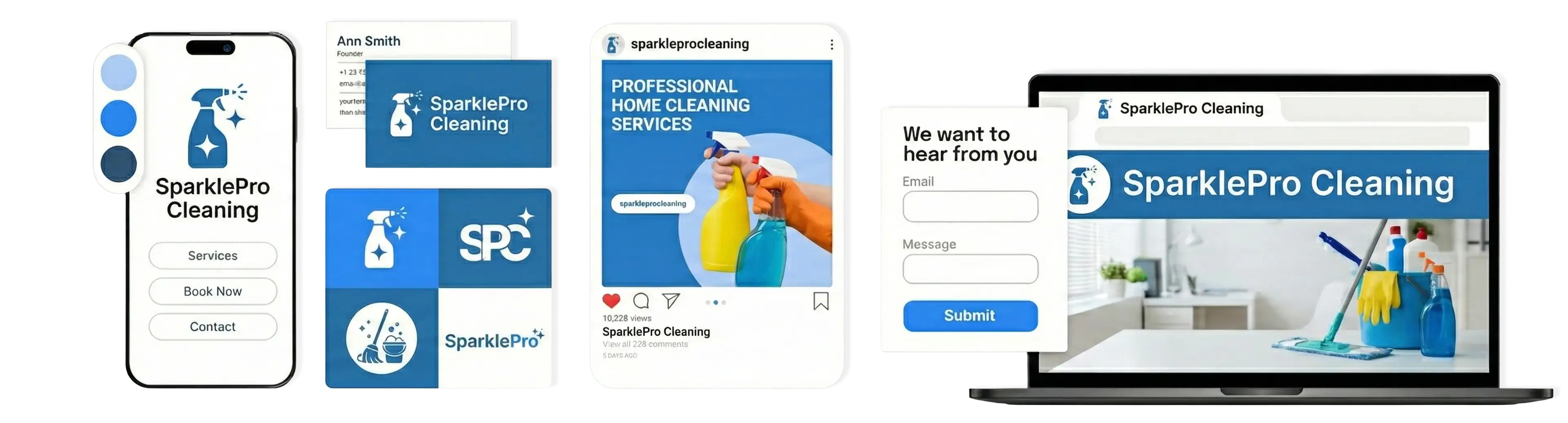
Table of Contents
- Get Started With A Cleaning Business
- Step 1: Choosing Your Path
- Step 2: Naming and Branding
- Step 3: Making Your Business Legal
- Step 4: Setting Your Prices
- Step 5: Equipment and Supplies
- Step 6: Protecting Yourself with Insurance
- Step 7: Getting Customers
- Step 8: Booking Systems
- Future Step: Finding and Hiring Great People
- Conclusion
Get Started With A Cleaning Business
Starting a cleaning business is one of the most reliable ways to build a future for yourself. It is an industry that does not go away. Buildings always get dirty, and they always need someone to clean them. You do not need a fancy degree or millions of dollars to start. You just need a plan, some hard work, and the willingness to learn.
This guide will walk you through every single part of how to start a cleaning business. We will look at how to pick your path, create your brand, make your business legal, buy the right tools, and find your very first customers.
Step 1: Choosing Your Path
Before you buy a new mop or start a cleaning business by printing business cards, you have to decide what kind of cleaning business you want to start. In the cleaning world, there are two main roads you can travel. They are very different from each other, and the one you pick will affect your daily routine.
Residential Cleaning
The first option is residential cleaning. This means you are cleaning people's homes. If you choose this path, you will be working during the day, usually from the morning until the late afternoon. This is a great schedule if you have a family or like to have your evenings free.

The work is very personal. You are going into the private spaces where people live, sleep, and eat. Because of this, your customers need to trust you completely. You become a part of their routine. The money is often good for each hour you work, but you have to drive from house to house, which takes time.
Commercial Cleaning
The second option is commercial cleaning. This means you are cleaning offices, medical clinics, schools, or warehouses. This work almost always happens at night or in the evening. You go in after the office workers have gone home.

If you are a night owl or you want to keep your day job while you start a cleaning business, this is a great choice. The work is less about making friends with the homeowner and more about getting the job done efficiently. You might clean the same big office every single night. The contracts for this type of work are usually much larger and last longer than home cleaning jobs.
Specialty Niches
You can also choose to be a specialist. For example, you could focus on cleaning vacation rentals like Airbnbs. This is fast-paced work because you have to clean a house exactly between 11:00 AM when one guest leaves and 3:00 PM when the next guest arrives. It is stressful, but it pays very well.
Another option is "green cleaning," where you promise to use only safe, eco-friendly products. Many families and modern offices are willing to pay extra for this because they worry about harsh chemicals.
Step 2: Naming and Branding
Now comes the fun part. Before you worry about paperwork, you get to decide who you are. This is where you give your business a personality. You need a name that sticks in people's minds and a look that makes them trust you instantly.
Choosing a Name
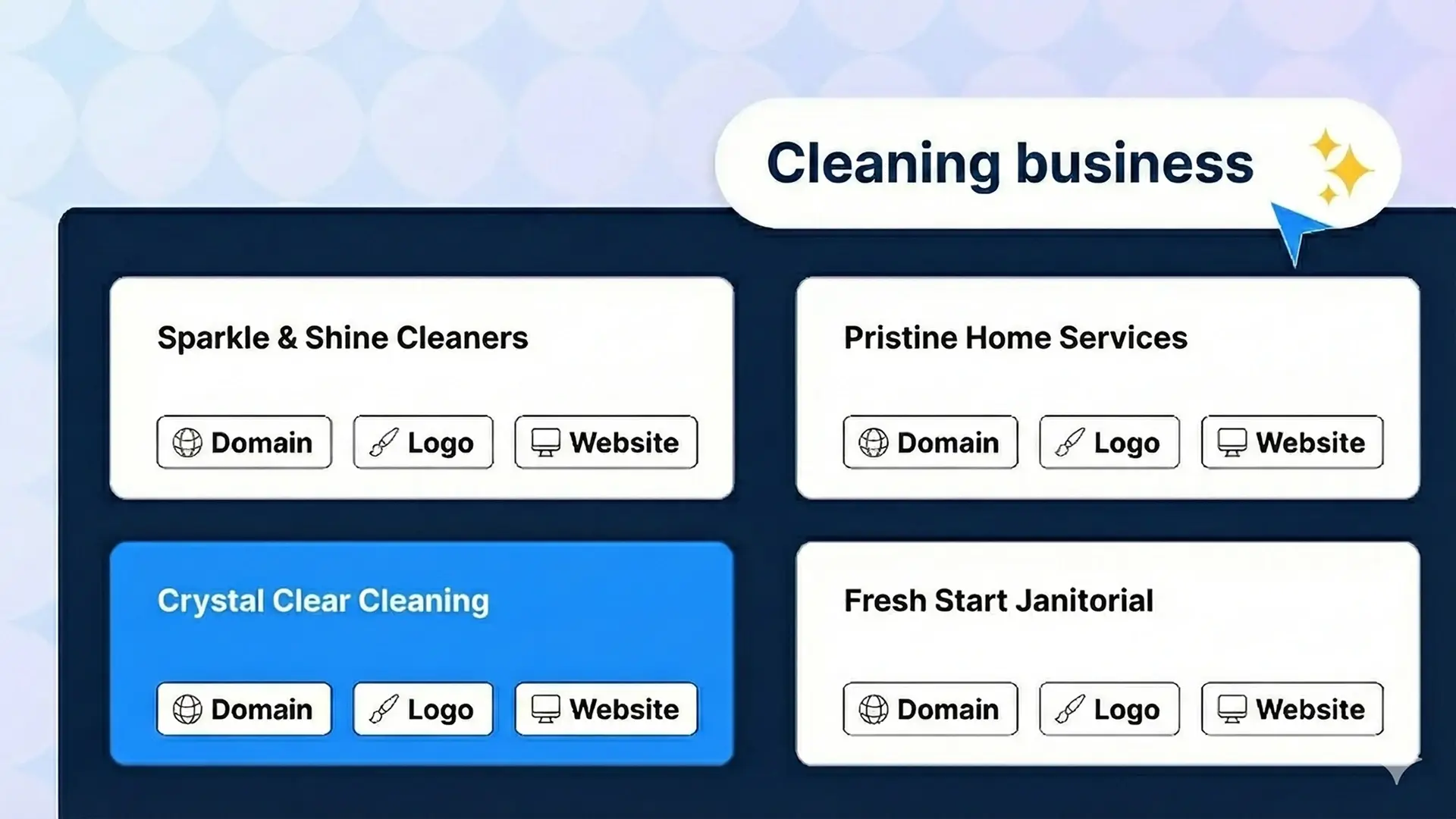
Your name should be easy to spell and easy to say. Avoid using long or complicated words. You want something that tells people exactly what you do or how you make them feel. A name like "Bright & Clean Services" is simple and clear. A name like "Smith's Facilities Management Solutions" might sound too corporate if you just want to clean houses.
Think about the feeling you want to give your customers. Do you want to seem friendly and cheerful? Or do you want to seem serious and industrial? Once you have an idea, type it into Google to make sure no one else in your town is already using it. You can also use a business name generator to get started with ideas.
Creating Your Look
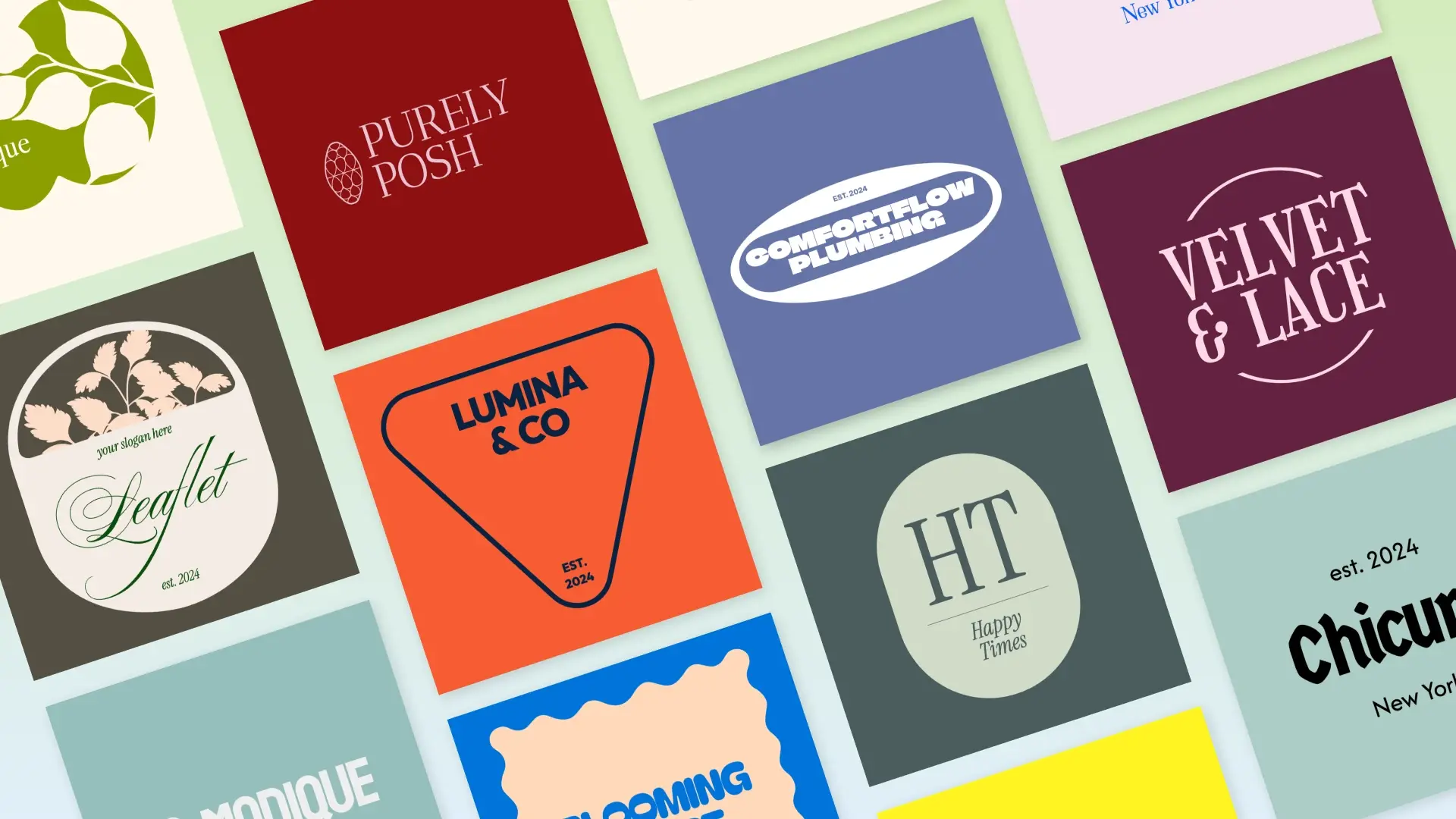
Once you have a name, you need a logo. This is the symbol that will go on your uniform, your website, and your business cards. It is the face of your company. Many new business owners get stuck here because they think they need to hire an expensive artist. You don't. You can use a simple brand building platform like logo.com to get started.
Tools like this let you type in your business name and instantly see different logo designs, colors, and fonts that match your style. You can pick one you love and download it right away.
Having a professional looking logo from day one will make you look like a serious business, not just a hobbyist. It helps customers trust that you will do a professional job.
Create a cleaning business brand
Step 3: Making Your Business Legal
Once you have your name and your plan, you have to make your business official. This protects you and makes sure you are following the rules of how to start a cleaning business.
Forming an LLC
The most important thing you can do is separate yourself from your business. You do not want to be personally responsible if something goes wrong. The best way to do this is to form a Limited Liability Company, or LLC.
Think of an LLC like a shield. If your business accidentally ruins an expensive rug or owes money, the shield protects your personal car, your house, and your personal bank account. If you do not have an LLC, you are taking a big risk. You can set this up by filing some simple paperwork with your state government.
Getting an EIN
Next, you need to get an Employer Identification Number, or EIN. You can think of this as a Social Security Number for your business. It is a unique number that the IRS gives you for free. You need this number to do almost anything official, like opening a bank account for your business or hiring people to help you. It tells the government that your business is a separate entity from you as a person.
Business Licensing
Finally, you need to ask your local city or county for permission to operate. This is the step most new owners find confusing because every city calls it something different. In some places, it is called a Business License, while in others, it is called a Business Tax Receipt, a Tax Certificate, or an Occupational Tax. It is important to understand that for general cleaning, this is usually not a test of your cleaning skills. The city does not care if you know how to mop. They just want you to register so you can file your taxes.
Finding the right form is easy if you know what to type into Google. You do not need to go to your state capital; you almost always need to look at your specific city or county website.
To find the exact page you need, open Google and type "Business License" followed by the name of your city and state. For example, if you live in Austin, Texas, you would search for "Business License Austin Texas". If you live in Miami, you might search for "Business Tax Receipt Miami Florida".
When you search, look for a result that ends in .gov. This usually takes you to the City Clerk or the Finance Department of your local government. Once you are on their website, look for a button that says "Apply for a Business License" or "Register a New Business."
If you are working from your own house, you should also look for a "Home Occupation Permit" on the same website, which is just a special permission slip that says you are allowed to run a business from your home address without bothering your neighbors.
Step 4: Setting Your Prices
One of the hardest parts of starting a cleaning business is deciding how much to charge. You want to make a profit, but you also want to be competitive. There are three main ways to price your services.
Hourly Pricing
The simplest way is to charge by the hour. You pick a rate, say $40 or $50 per hour, and you charge the customer for exactly how long you are there. This is a great method when you are doing a "deep clean" or cleaning a very dirty house for the first time. You don't know how long it will take to scrub years of dirt away, so charging by the hour ensures you get paid for all your effort.
Flat Rate Pricing
Most homeowners prefer a flat rate. This means you tell them exactly what the price will be before you start, like $150 for the whole house. Customers love this because they know exactly what to write on the check. However, you have to be careful. If you guess that the job will take three hours but it actually takes six, you lose money. You have to get very good at estimating how long a job will take.
Square Footage Pricing
If you are cleaning offices, you will usually charge by the square foot. You measure the office and multiply that number by a specific rate, like 10 or 15 cents. This is very standard in the commercial world. It is purely based on math. The bigger the building, the more you charge. To help you estimate this accurately, you can use a free Janitorial Cost Per Square Foot Calculator to run the numbers for your area.
Step 5: Equipment and Supplies
When you are first start a cleaning business, especially with residential homes, it is perfectly fine to use the vacuum and supplies you already have at home. However, keep in mind that standard household tools are often designed for light, weekly use. As you get busier, you will find that professional equipment helps you clean much faster and lasts longer, which means you can make more money in less time. Here are two clear recommendations for each category to look for when you are ready to upgrade.
Vacuum Cleaners
The vacuum is the most critical tool in your arsenal, and the type you choose depends on your business model. For residential cleaning, where you need to maneuver around furniture carefully, the Shark Navigator Lift-Away is an excellent choice. It has strong suction to pick up pet hair and a detachable canister that makes cleaning stairs easy.
For commercial and office cleaning, speed is everything, so you should invest in the ProTeam Super CoachVac. This backpack vacuum is the industry standard because it is powerful, durable, and lets you clean large spaces rapidly.
Mops and Cloths
Professional cleaners have largely moved away from traditional string mops in favor of microfiber. For residential cleaning, the O-Cedar EasyWring Spin Mop is a favorite because it separates dirty water and is easy to carry between rooms.
For commercial jobs or large open spaces, you need something heavier duty. The Rubbermaid Hygen system is a top-tier flat mop used in hospitals that allows you to clean efficiently without spreading germs.
Cleaning Chemicals
You do not need a different bottle for every surface; you just need a few high-quality concentrates. For an all-purpose cleaner that is safe, effective, and eco-friendly, Simple Green is a versatile option that customers love. When you need to disinfect bathrooms and kill germs, rely on Lysol Professional. It is a trusted brand that meets safety standards and reassures clients that their space is truly sanitized.
Step 6: Protecting Yourself with Insurance
In the cleaning business, accidents happen. You might knock over a vase, scratch a table, or spill bleach on a carpet. You need insurance to fix these mistakes so they don't bankrupt you.
General Liability Insurance
This is the most common type of insurance. It covers damage to property and injuries to people. For example, if you are mopping a floor and a customer slips and falls, this insurance helps pay for their medical bills. Or if you break that expensive vase we mentioned, this insurance pays to replace it. You should aim to get a policy that covers up to one million dollars. It sounds like a lot, but it usually costs less than a hundred dollars a month, and it allows you to work for big commercial clients who require it.
Workers' Compensation
If you hire anyone to help you clean, you need Workers' Compensation insurance. Cleaning is physical work. People can hurt their backs, slip on wet floors, or get rashes from cleaning chemicals. This insurance pays for their doctor visits and lost wages if they get hurt while working for you. In most states, this is the law as soon as you hire your first employee.
The Surety Bond
You might hear people talk about being "bonded." A bond is different from insurance. Insurance protects you, but a bond protects your customer. Specifically, it protects them from theft. If one of your employees steals a laptop or jewelry from a client, the bond company pays the customer back. Having a bond is a powerful marketing tool. It tells your customers that their belongings are safe with you. It builds trust before you even walk through the door.
Step 7: Getting Customers
This is the moment your idea stops being a project and you officially have a cleaning business. You don't need to be a marketing genius to get your phone to ring; you just need to be visible. Here is how to get your name in front of the people who are in need of your help.
Digital Marketing
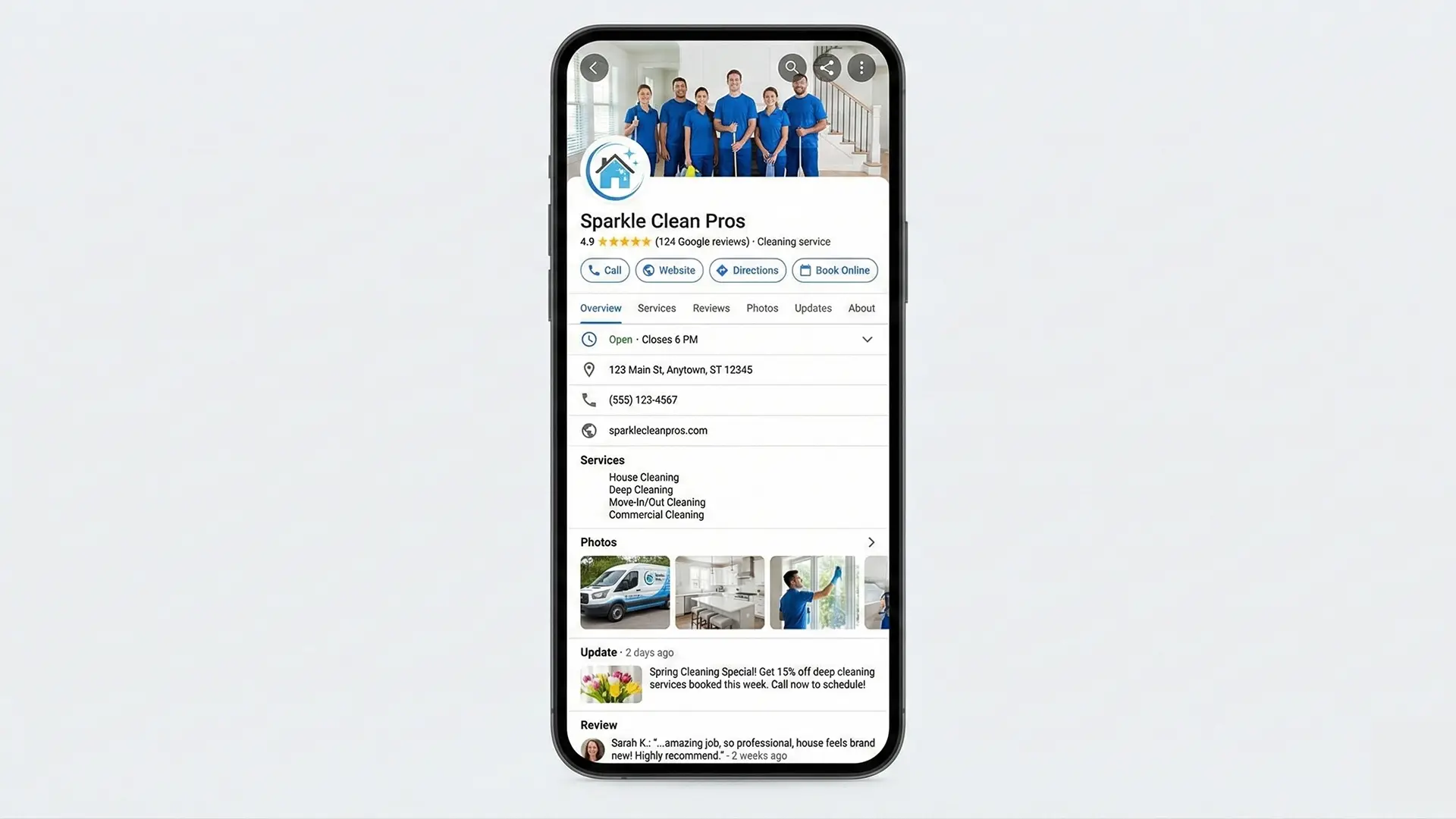
Most people find cleaners by looking on the internet. You need to have a presence there. Start by creating a Google Business Profile. This is free, and it allows your business to show up on Google Maps when someone searches for "cleaners near me." Make sure you fill out all the information and add photos of your smiling team. You should also have a simple website where people can request a quote. If you make it easy for them to contact you, they are more likely to hire you.
Local Marketing
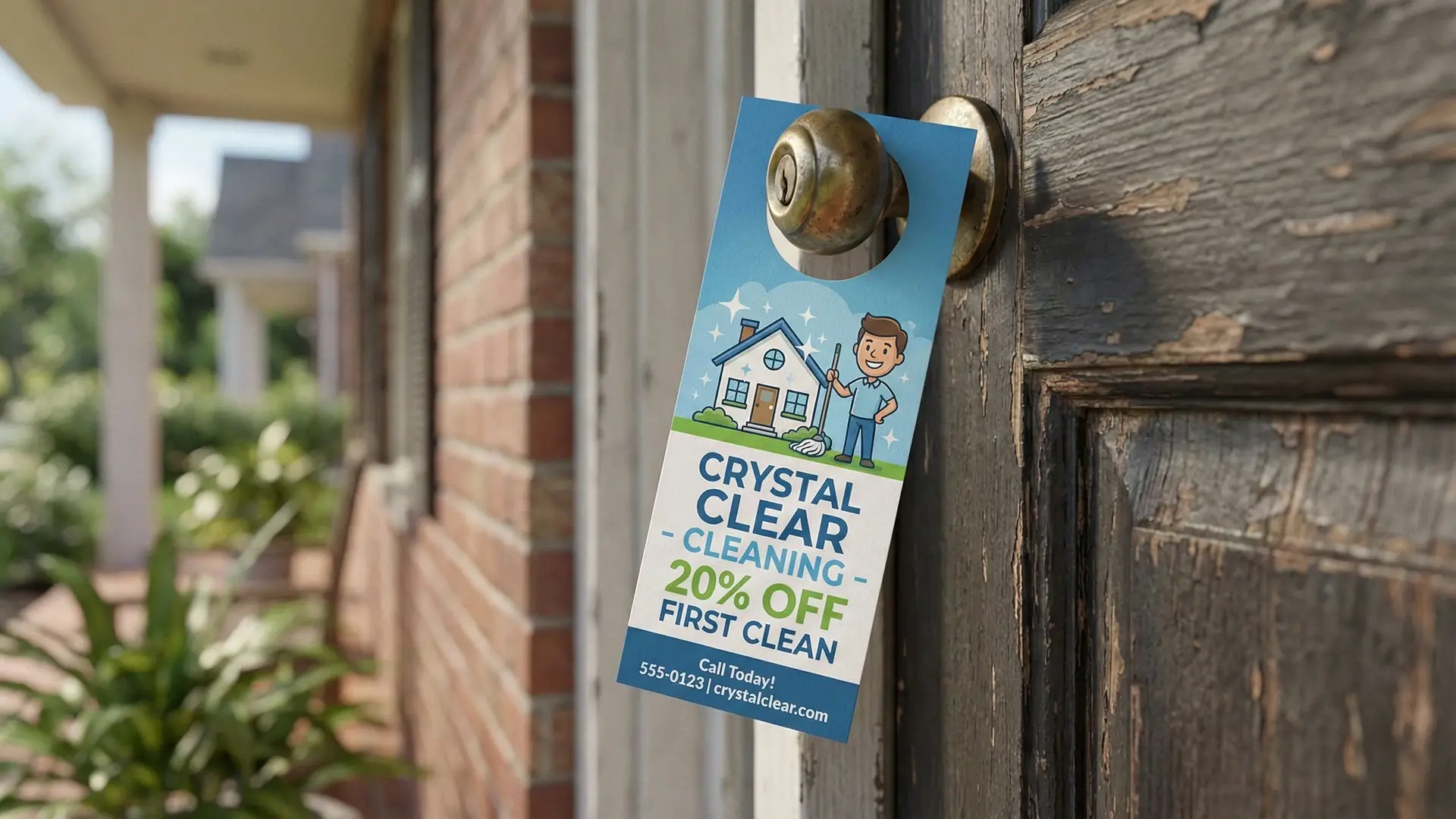
For residential cleaning, sometimes the old ways work best. You can print door hangers and leave them on the knobs of houses in neighborhoods you want to work in. If you want to clean offices, you have to be a little braver. Walk into the buildings you want to clean and ask to speak to the office manager. Introduce yourself, hand them a card, and tell them you are a local business owner. Personal connections go a long way.
Reviews and Reputation
When you do a good job, ask your happy customer to leave you a review online. People trust reviews. If they see that twenty other people had a great experience with you, they will feel safe hiring you too. Always be on time, be polite, and do exactly what you promised. Your reputation is your most valuable asset.
Step 8: Booking Systems
As you grow a cleaning business and get more customers and employees, it gets harder to keep track of everything in your head. You need systems to stay organized.
Software
There are computer programs and phone apps made just for cleaning businesses. They help you schedule your jobs so you don't double-book yourself. They can send automatic text messages to your clients reminding them that you are coming. They also help you send invoices and get paid by credit card.
You can start with a free tool like Square Appointments or upgrade to a popular industry standard like Jobber. Using software makes you look professional and saves you hours of paperwork.
The "Ready to Launch" Checklist
Here is exactly what you need to have in your hand by the end of each step.
Step 1: Choosing Your Path
A clear decision on your market (Residential, Commercial, or Niche).
A list of 3-5 competitors in your area to see what they offer.
Step 2: Naming and Branding
Your business name (checked on Google to ensure it's available).
A professional logo file saved on your computer.
A brand kit with fonts, colors and brand design files.
Step 3: Making Your Business Legal
Articles of Organization (filed with your State)
EIN Letter (received from the IRS).
Business License / Tax Receipt (from your City or County).
Business Bank Account (opened using your EIN).
Step 4: Pricing
A printed "Rate Sheet" or a digital document listing your prices.
A template for giving quotes to customers.
Step 5: Equipment and Supplies
Vacuum cleaner (assembled and tested).
Mop system (bucket and mop heads).
Supply kit (All-purpose cleaner, Disinfectant, Color-coded cloths).
Uniforms or branded t-shirts.
Step 6: Insurance
General Liability Certificate (showing at least $1 Million coverage).
Workers' Compensation Policy Number (if hiring).
Surety Bond Certificate (if hiring).
Step 7: Getting Customers
Google Business Profile (Verified and Live).
A website URL that works.
100+ printed door hangers or business cards ready to distribute.
Step 8: Systems
Login for your scheduling software (CRM).
Future Step: Finding and Hiring Great People
Once you have successfully launched and filled your schedule, you will face a new problem: you cannot be in two places at once. This is the sign that you are ready to grow from a solo cleaner into a scalable business. Here is what to look forward to when that time comes.
Employees vs. Contractors
You have a choice to make when you hire. You can hire employees (W-2) or independent contractors (1099). It is almost always better to hire employees. When you hire an employee, you can tell them exactly what to do. You can train them to clean your way, make them wear your uniform, and control their schedule.
If you hire a contractor, the law says you cannot control how they do their job. You want your business to deliver the same great quality every time, so having employees you can train is the best way to grow.
Background Checks
Because your staff will be working in people's private homes or in offices with sensitive information, trust is everything. You should run a criminal background check on the people you hire. For example, you need to know if they have a history of theft or violence. Being able to tell your customers that every member of your team has passed a background check is a huge selling point.
Training
To get the best results, take the time to train your team. Instead of just handing them a mop, walk them through your specific methods. Teach them safety basics, like proper lifting techniques and chemical handling. Show them a consistent system, like cleaning from top-to-bottom so they can work efficiently. This helps them feel confident and ensures they never miss a spot.
Conclusion
Starting a cleaning business is a journey. It starts with a bucket and a dream, but it can grow into a large, successful company that supports you and your family. It requires you to wear many hats; cleaner, boss, accountant, and salesperson.
But if you follow these steps, treat your customers with respect, and commit to doing excellent work, you will build a business to be proud of. The world is full of dirty floors, and that means there is always opportunity waiting!